School History Documentary Screening Recap – The Film Is Now Online

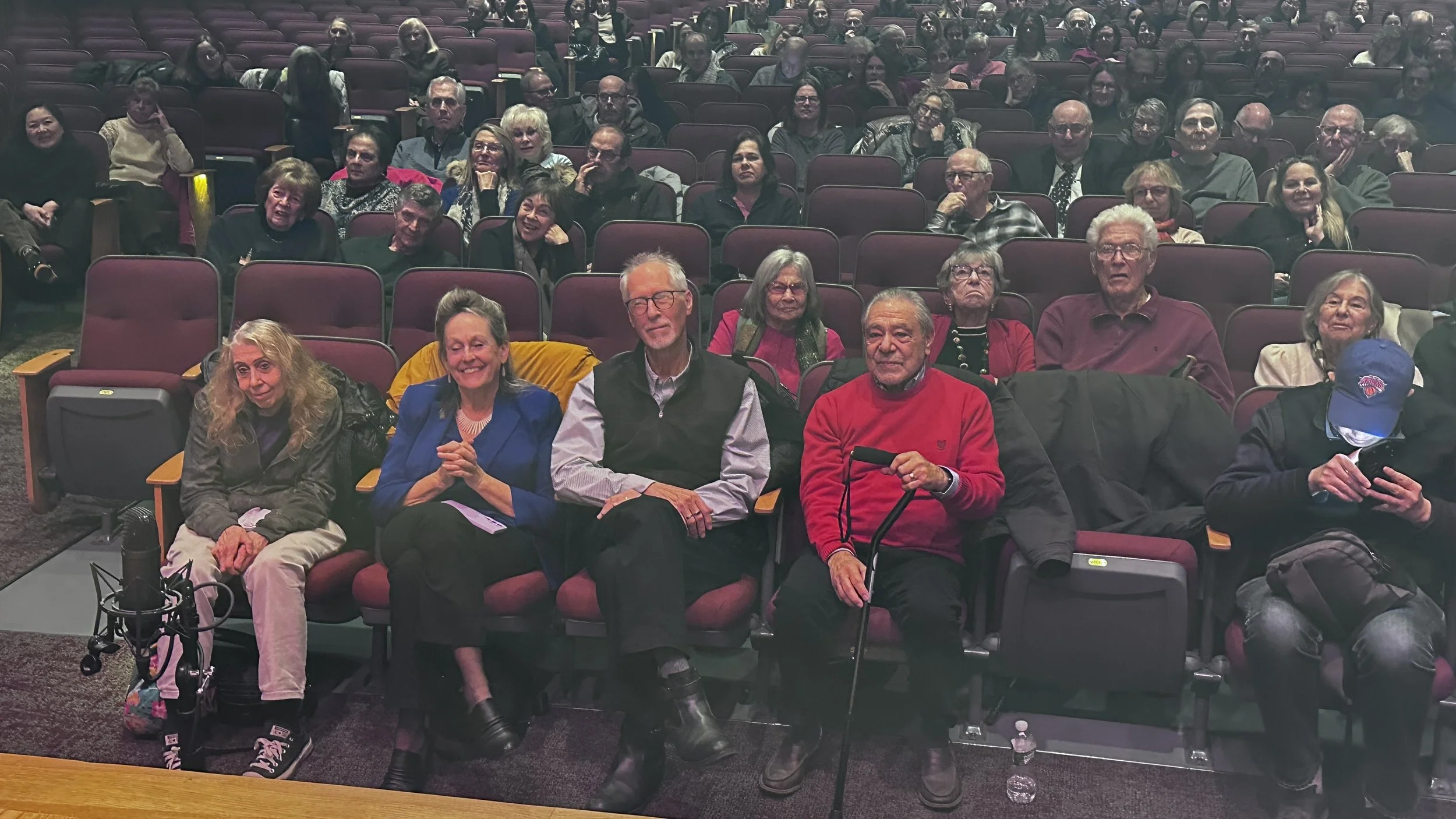
The Scarsdale community really knows how to “show up.” Around 200 alumni, neighbors and friends came together for a rare opportunity to celebrate our public school district on Wednesday night at the high school auditorium. As conveyed in our new film From the First Schoolhouse: A Scarsdale Story, this community-minded spirit is what has helped the Scarsdale Schools thrive. 

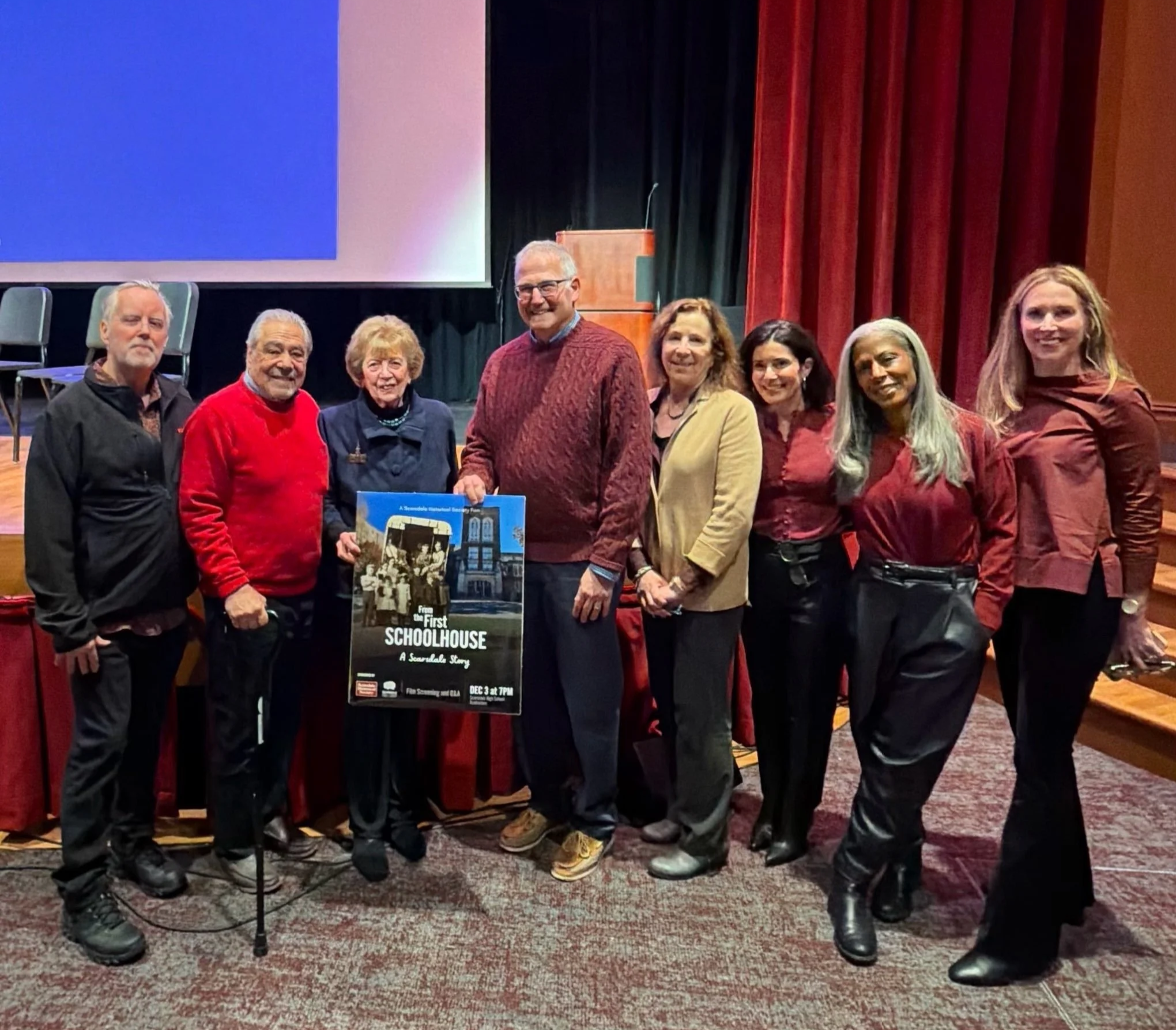
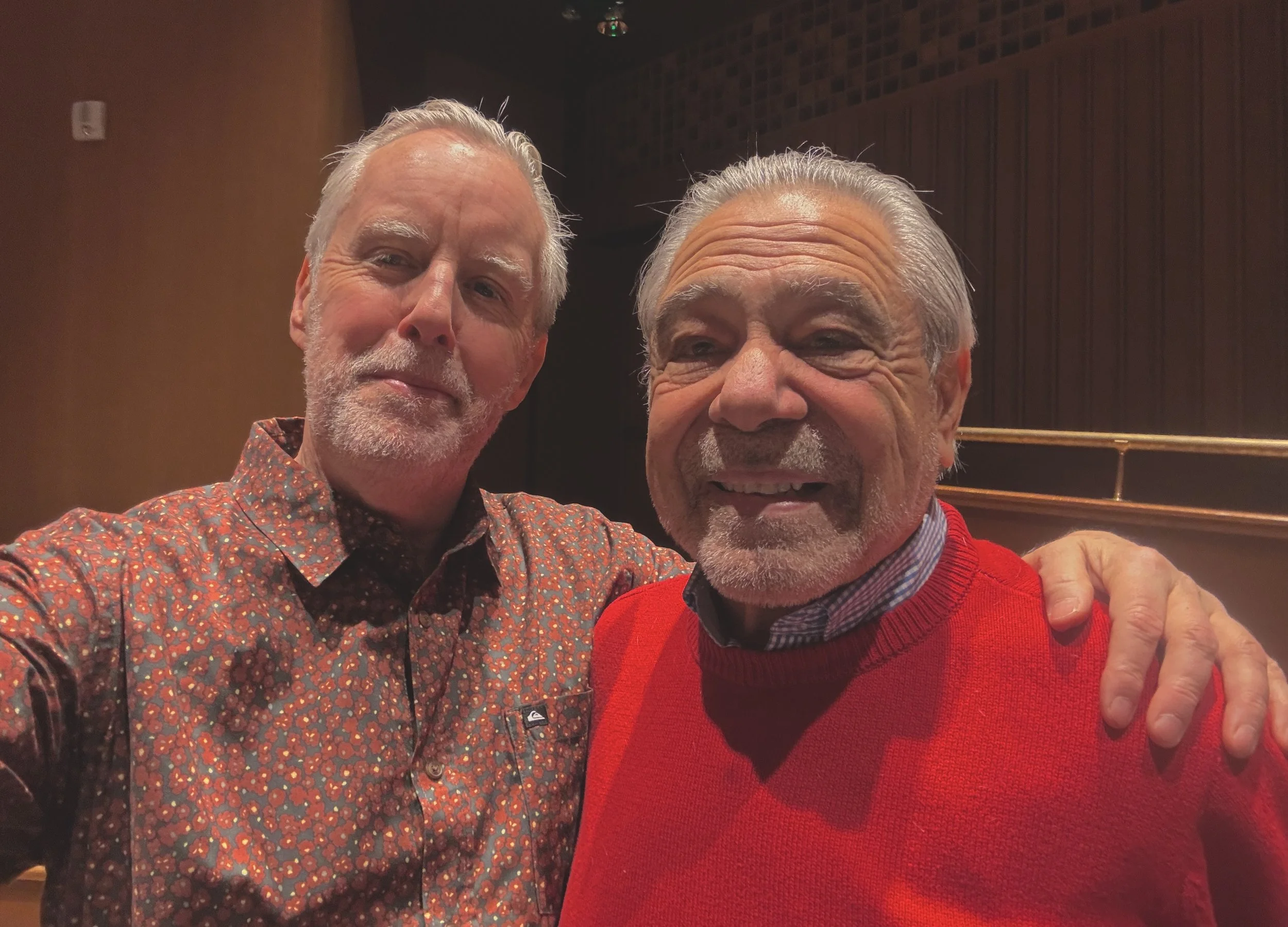
Left to right: William Klayer ‘73, Tony Arenella, Ruth Friendly, Scarsdale Historical Society President Randy Guggenheimer, filmmaker Lesley Topping and trustees Lori Rothman, Deidre Michael, Leslie Chang.

From a beloved centenarian educator, to a founder of the Scarsdale Alternative School, to an original Alternative School alum, we had true Scarsdale Schools legends in the high school auditorium. They are featured participants in the documentary, and here’s more background on them:

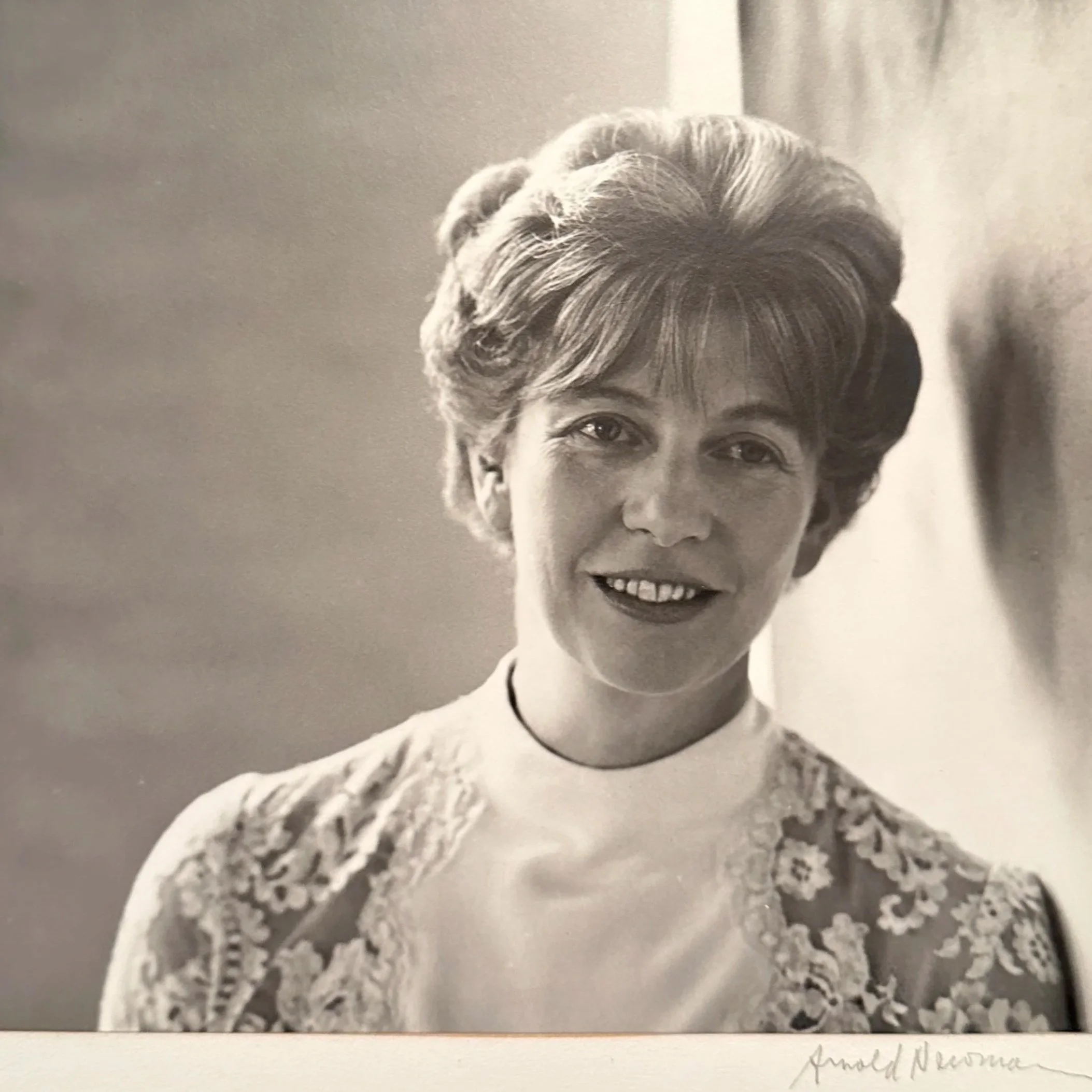
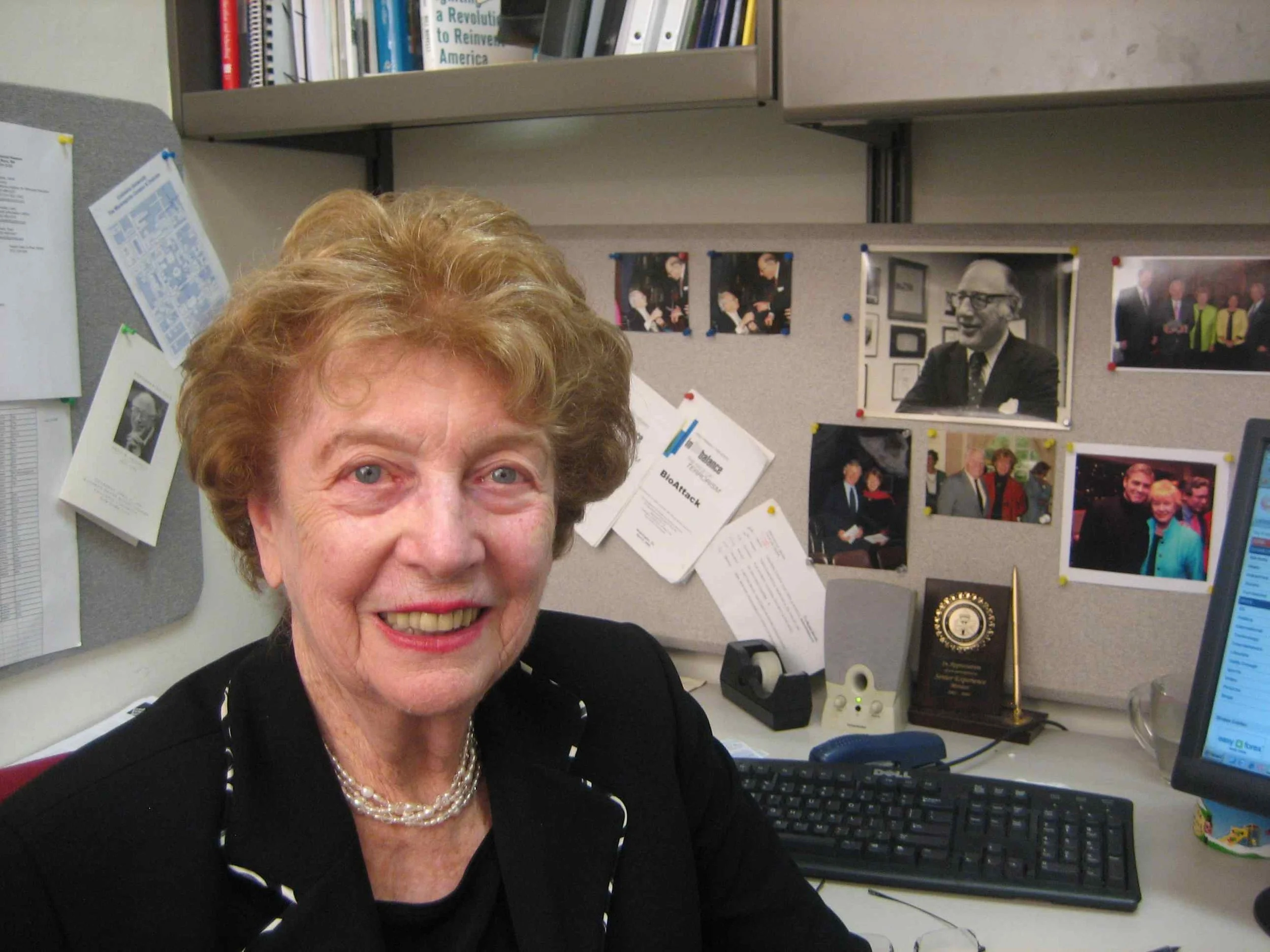
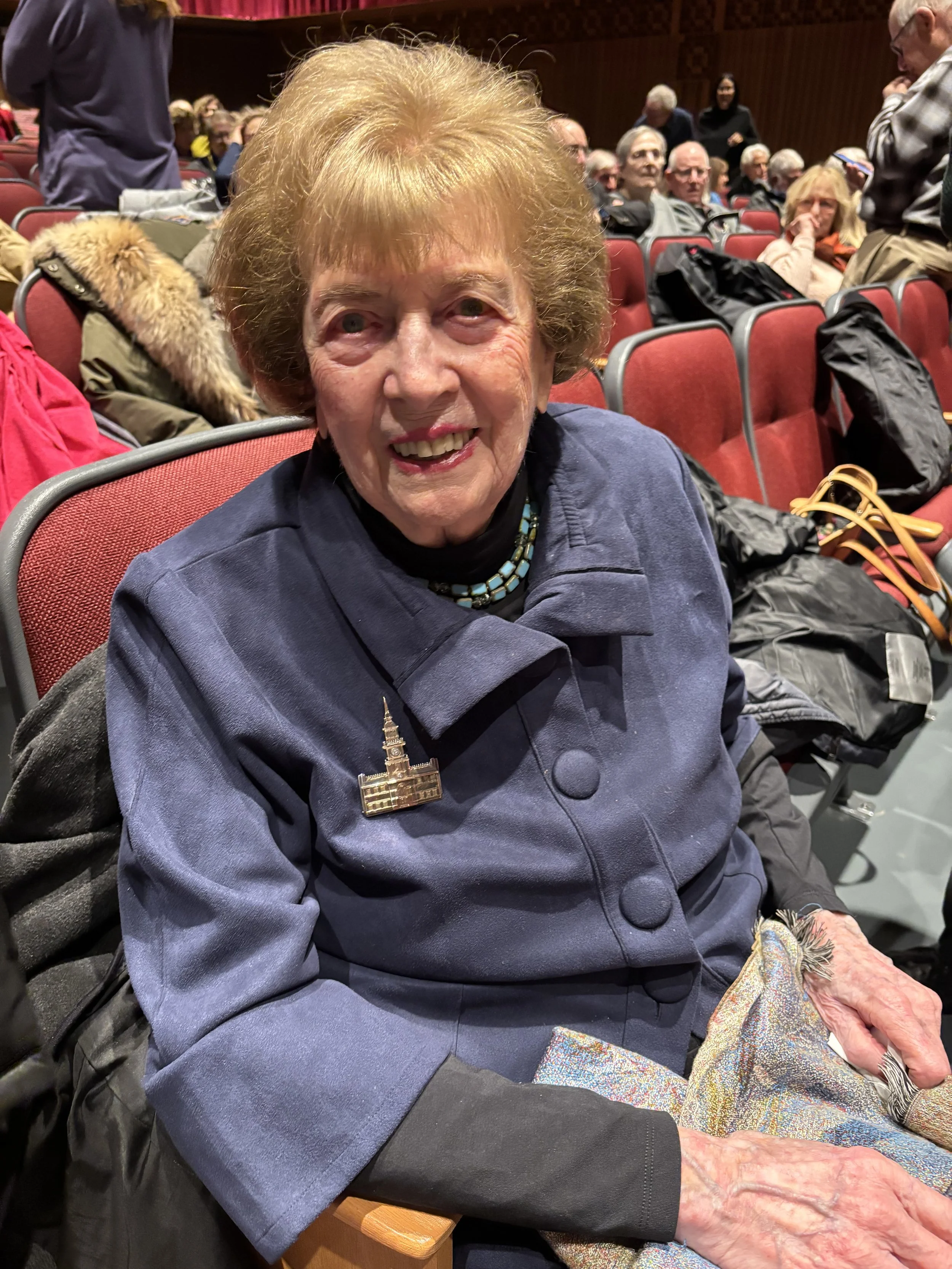
Ruth Friendly

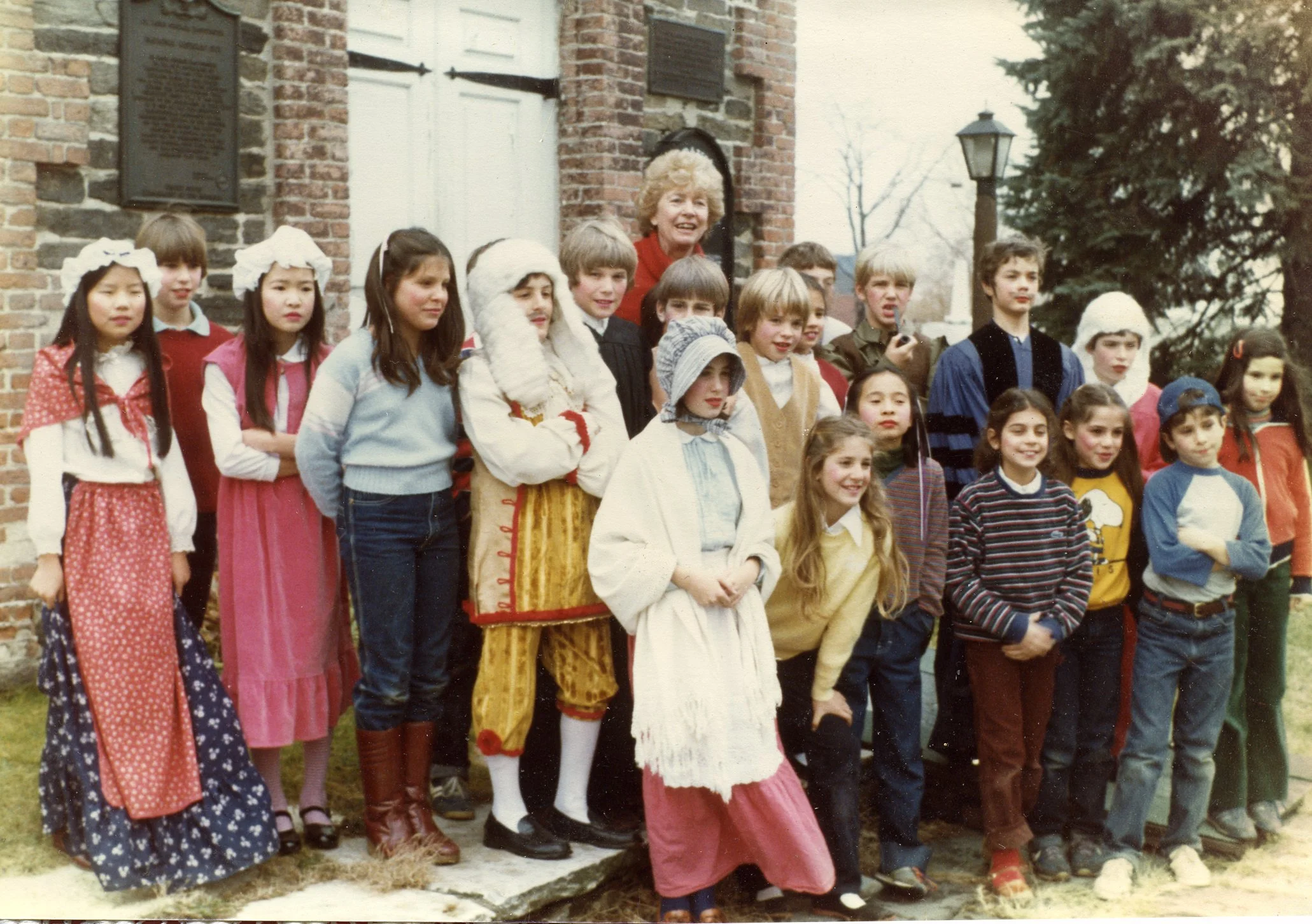
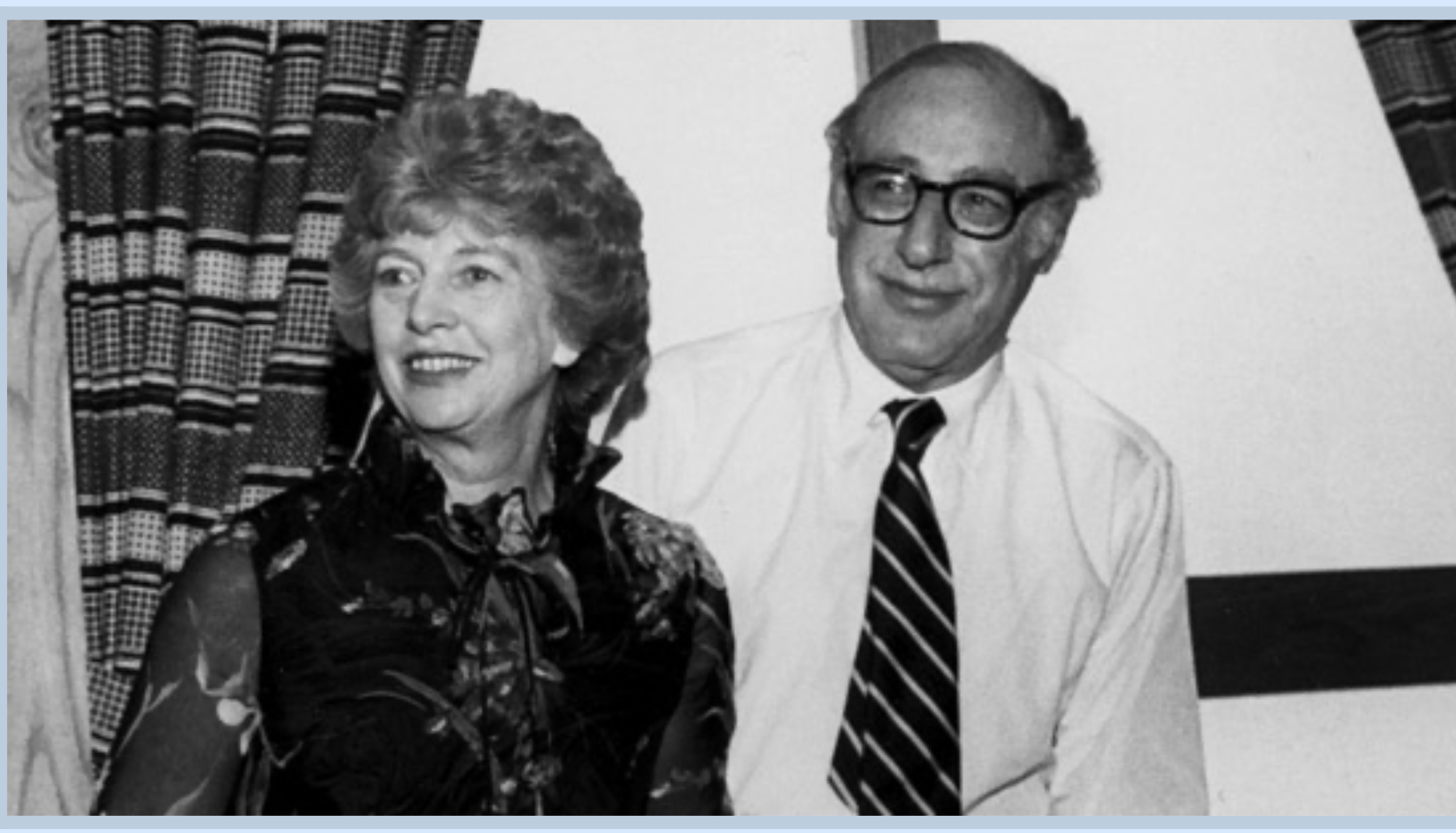
Ruth taught at Greenacres, Heathcote, and Edgewood from the 1960s through the early 1980s. After teaching, she joined her husband Fred, the former president of CBS News and the Edward R. Murrow Professor Emeritus at Columbia University, to produce programming for the Media and Society Seminars, later known as the Fred Friendly Seminars. The programs aired nationally on PBS and explored major issues of our time. In the 2000s Ruth served for eight years on the New York State Commission of Nomination for the Court of Appeals.

Tony Arenella and William Klayer

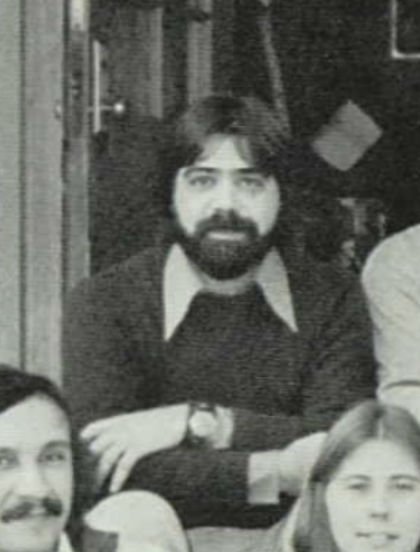
Tony Arenella was one of the founders of the Scarsdale Alternative School (A-School), which was planned in 1970. Tony taught English, and then became the director of the A-School in 1981 until he retired in 2003. Beginning with only sixty-two students, three full-time teachers, and several part-time teachers, the early team developed the groundbreaking philosophies and structures that still shape the A-School today.

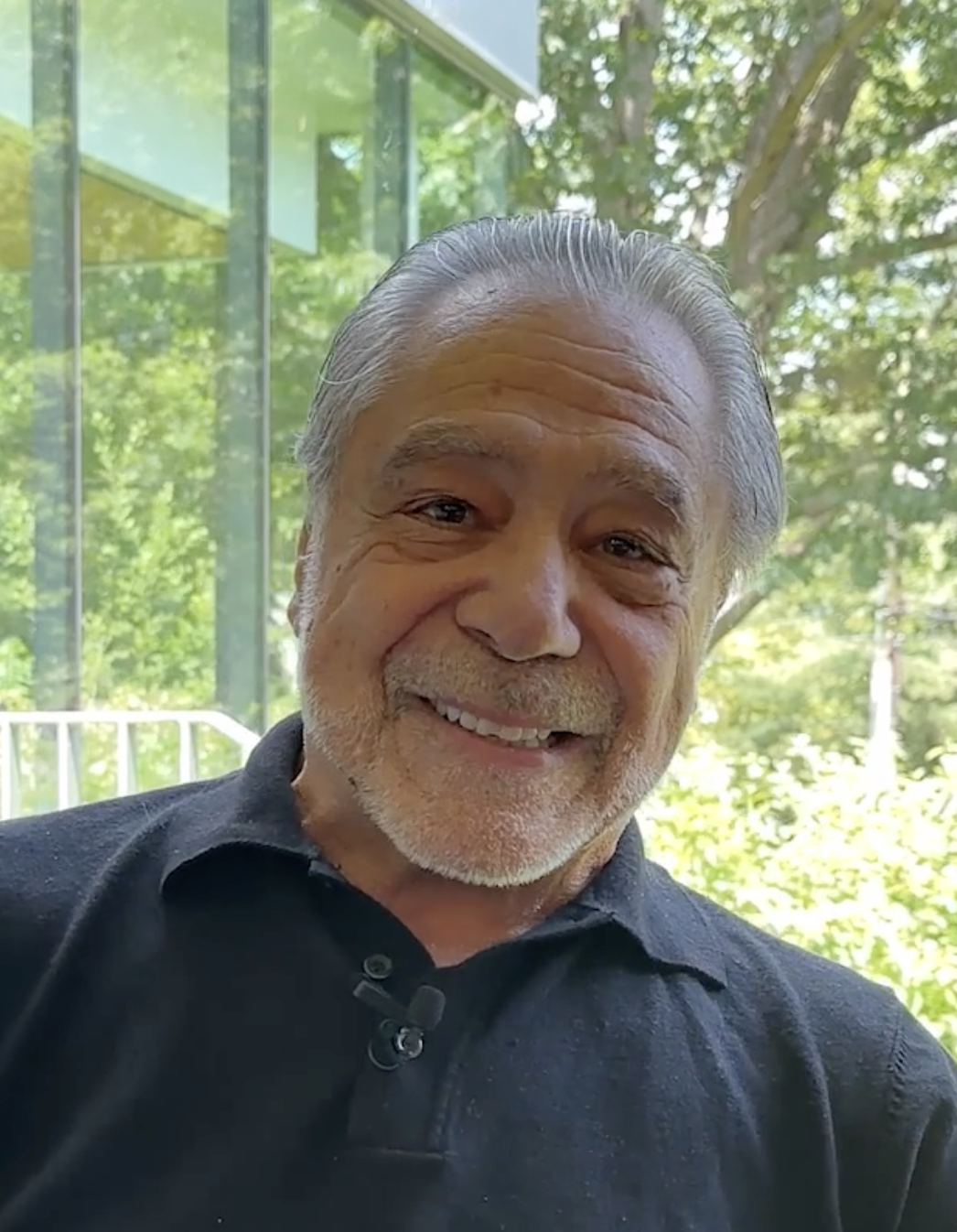
William Klayer was one of the first students to graduate from the A-School in 1973, and went on to build a distinguished career in television and film as a director and photographer. His extensive credits include 30 Rock, Suits, Law & Order, and the award-winning short film Under a Stone.

We are so grateful to the filmmaker Lesley Topping for creating this film. Through her documentaries, she skillfully preserves Scarsdale’s most important stories—and they’re all available here.

Lesley Topping

Lesley, a Scarsdale Schools alum, is the editor and director of the film. Her credits also include many short videos, feature films and television documentaries for CBS, A&E and the Cousteau Society.

Thank you to Scarsdale Public Library for the partnership and for co-sponsoring the event. Don’t miss their new exhibit on the Scarsdale Public Schools, created by the library’s Local History Librarian Dan Glauber. It’s on display in the Local History Center of the library, or online here.

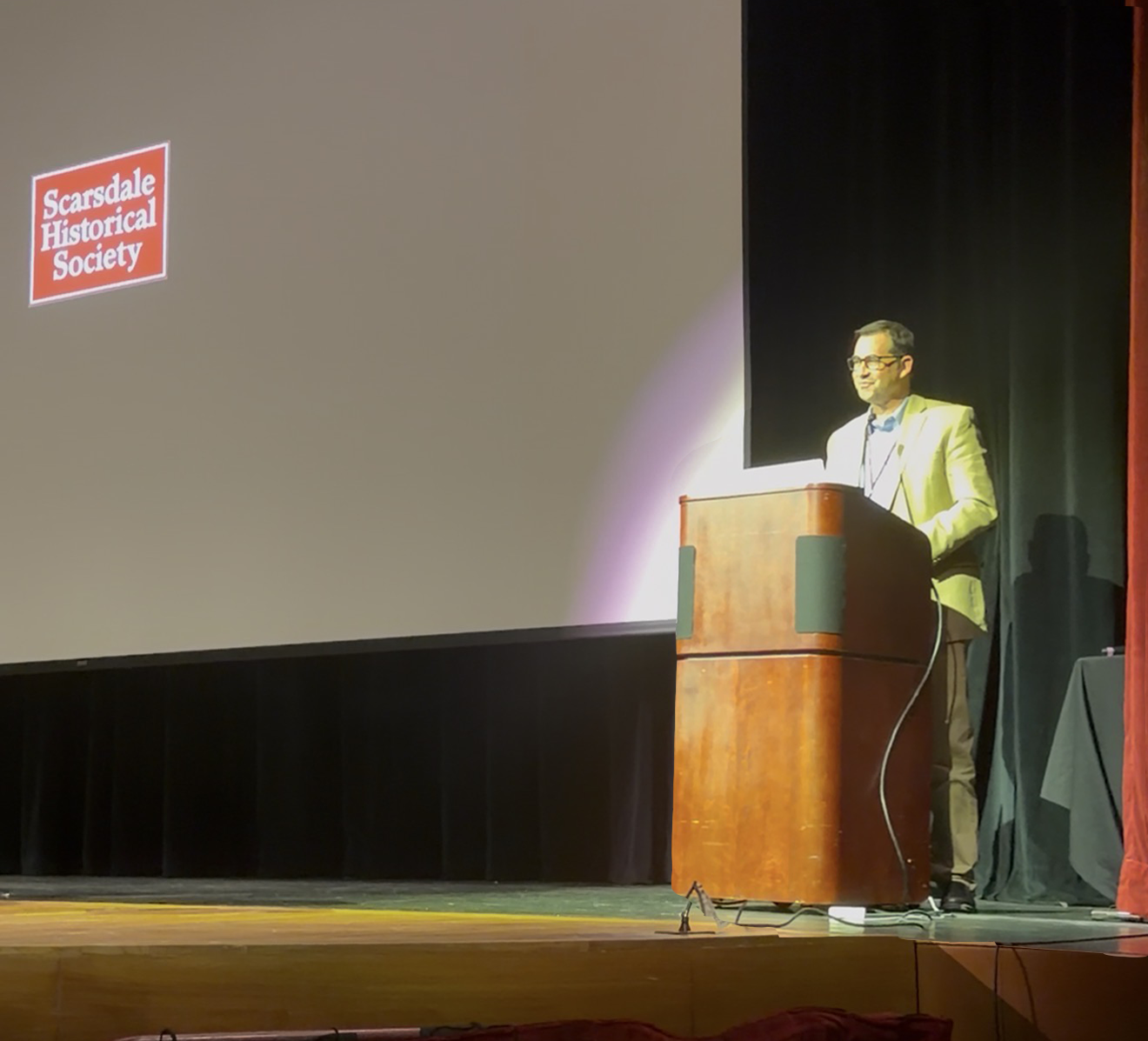
We also thank Scarsdale Public Schools Superintendent Drew Patrick for his support throughout the production of this film. His opening remarks added a moment of extra distinction to the event.

Scarsdale Public Schools Superintendent Drew Patrick introduced the film.

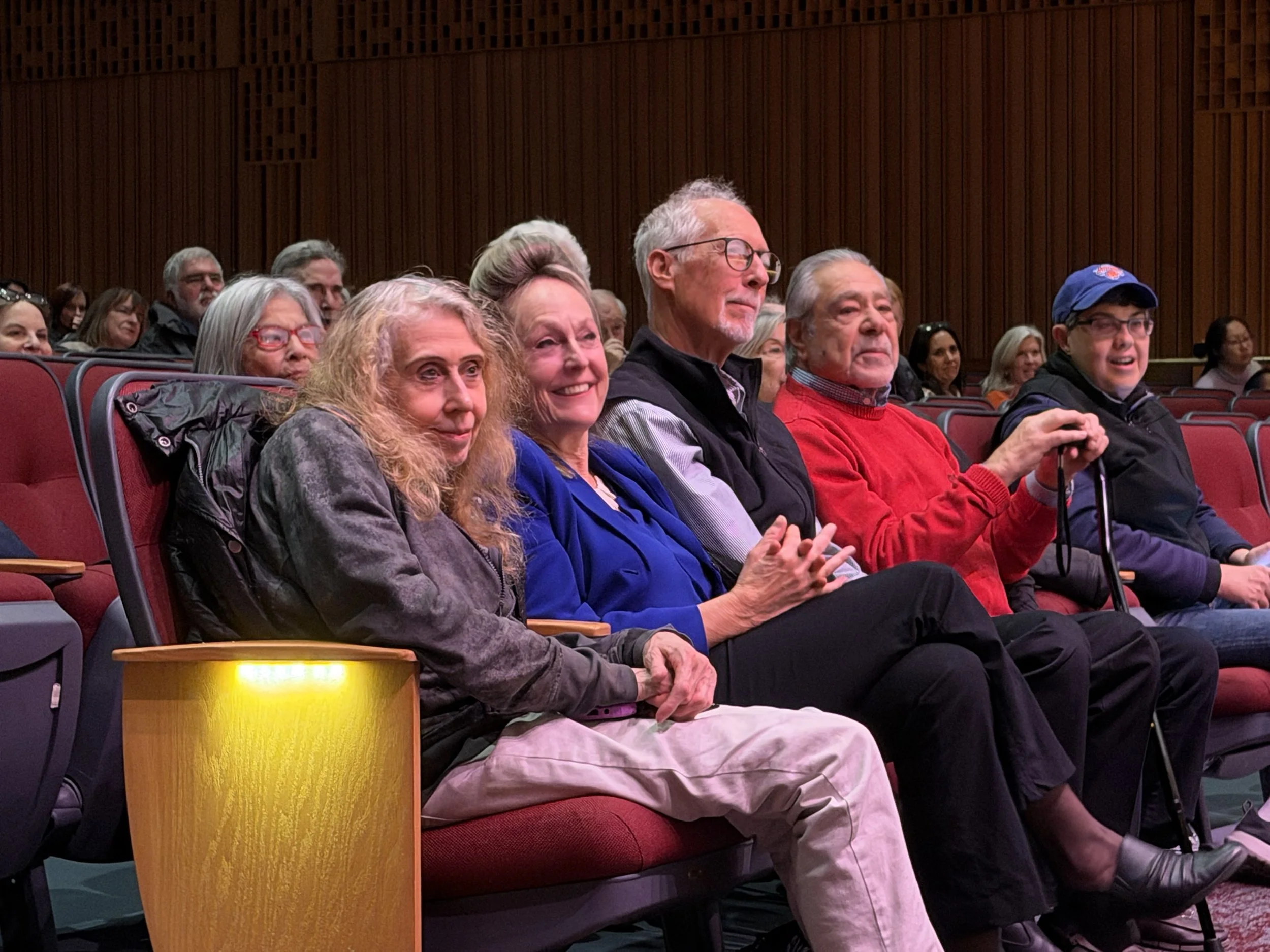
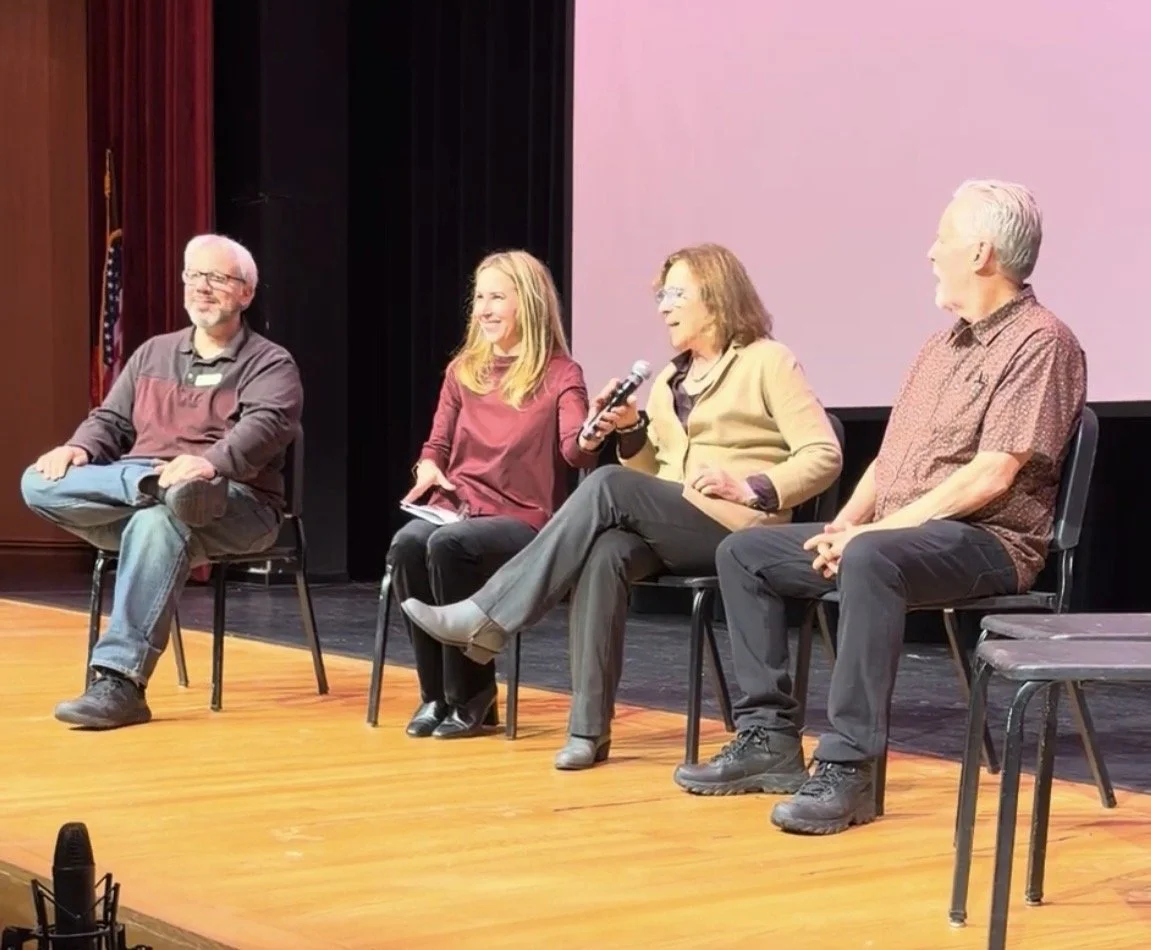
The audience was very engaged during the Q&A Session, especially all of the alumni that shared stories from their school days.

At the panel discussion, left to right: Dan, Leslie, Lesley, and William. Tony and Ruth answered questions from their seats in the audience. 

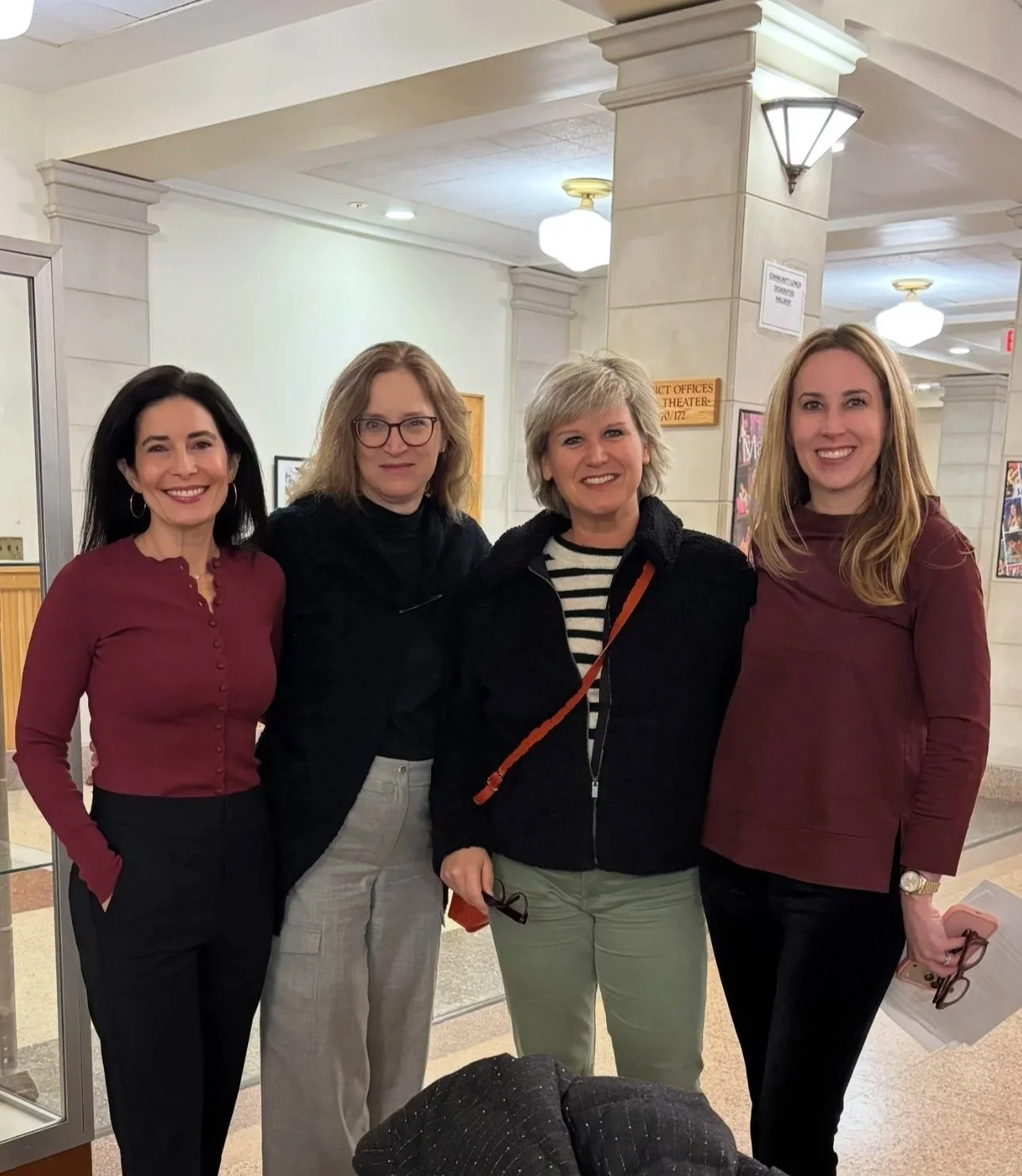
Scarsdale Historical Society trustees greeting attendees, from left to right: Lori, May Cowan, Lesley Shearer, and Leslie

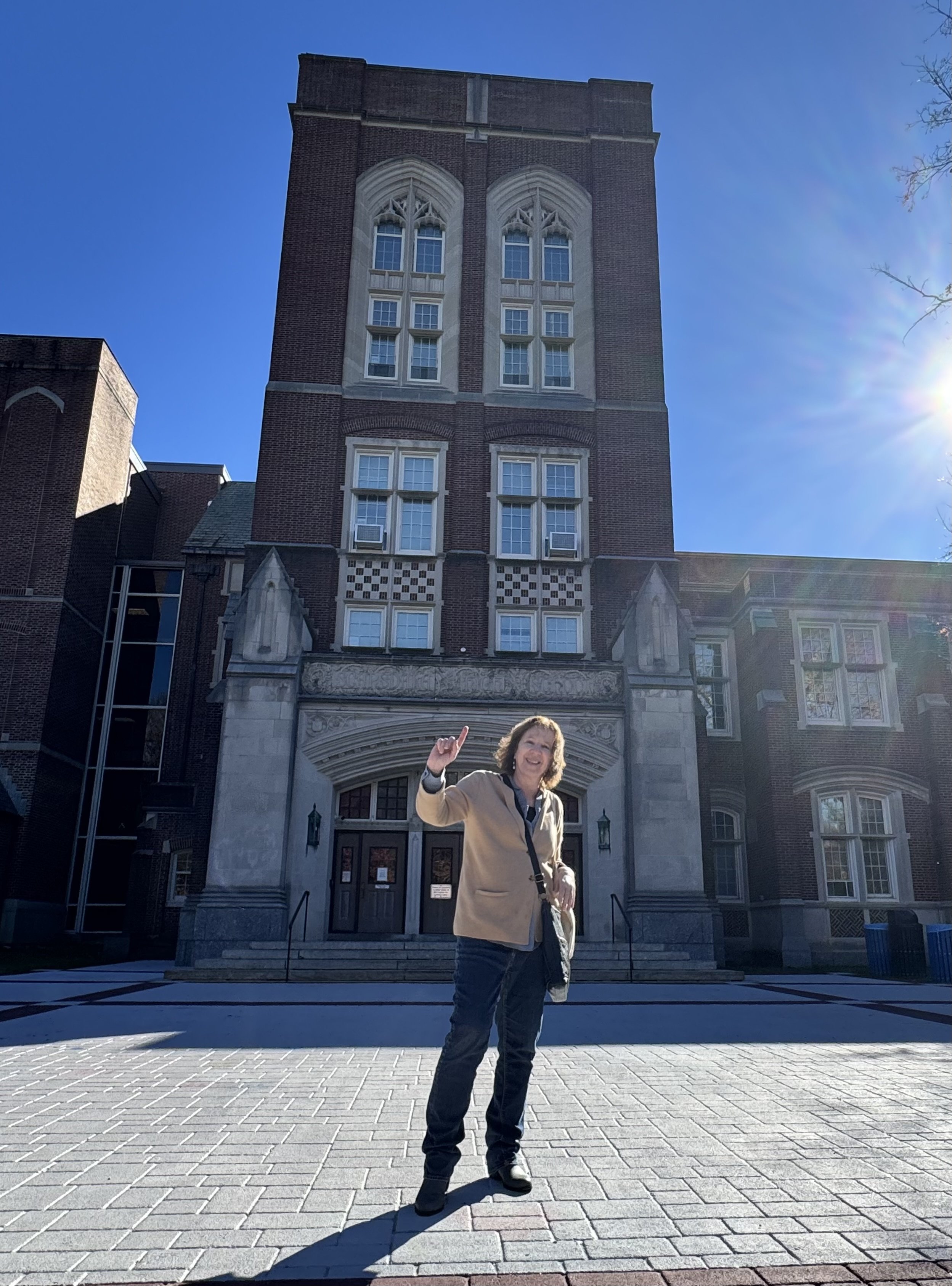
The event drew a crowd of all ages, and alumni enjoyed seeing the newly renovated auditorium.

“From the First Schoolhouse: A Scarsdale Story”


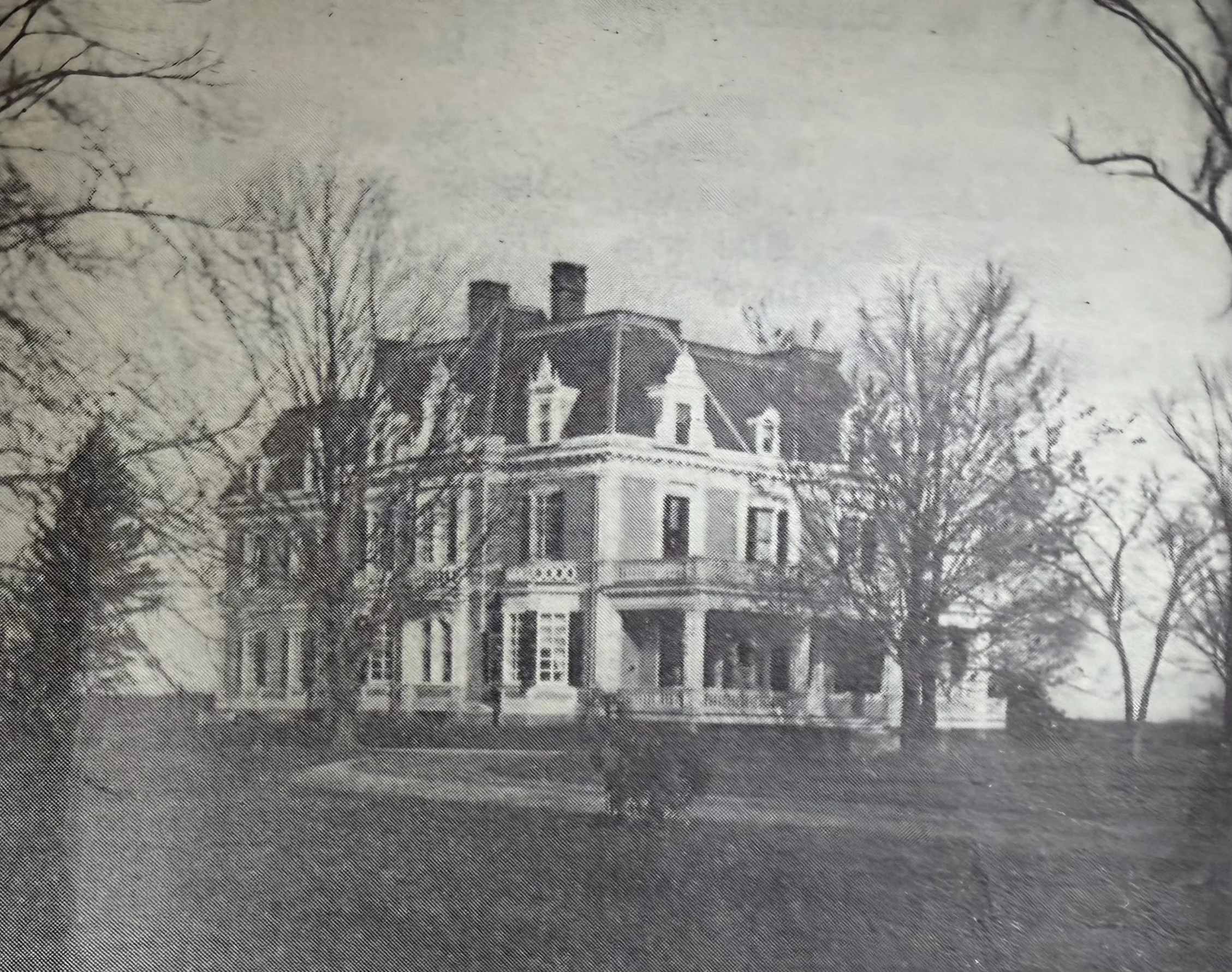
The Fuller Estate and Bradford Road

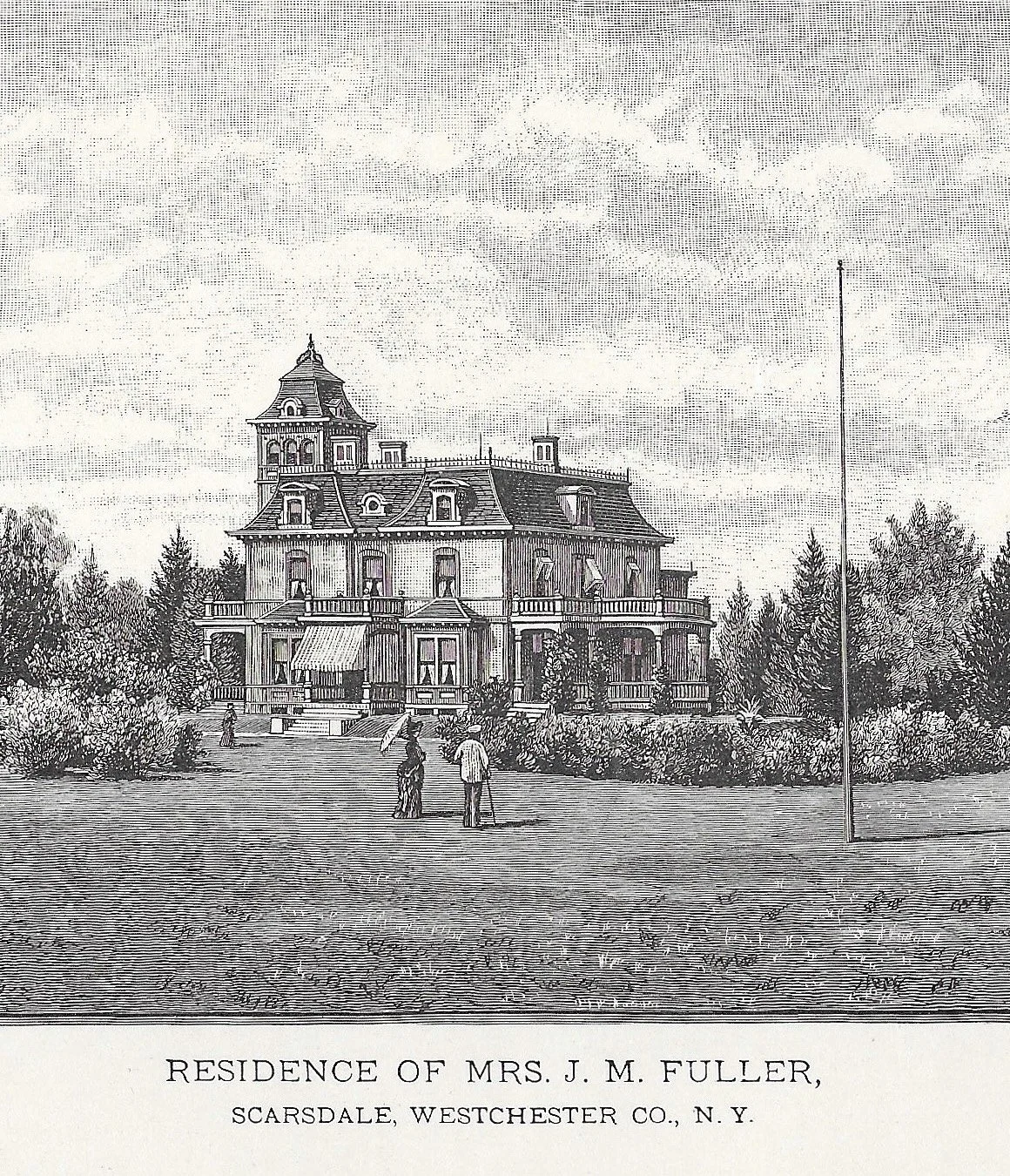
One of Quaker Ridge's grandest and oldest homes was destroyed by fire in 1925. 

Engraving, dated 1886 - the year after James M. Fuller passed away. Signed J.M. Brown

The house was on today’s Weaver Street toward Griffen Avenue. The fire was believed to be "of incendiary origin," since it started on a back porch with no explanation. On a night in 1925, there were 70 mph winds, and the fire hoses didn't have enough water pressure to get up the hill (they referred to it as "the ridge") to the house - until they eventually tapped a NYC water supply main. It was too late.

The home was originally built by James M. Fuller in the mid 1800s. He was an influential member of the NY Stock Exchange. In 1871, Grand Park Boulevard ended at the Mamaroneck border, so he paid for it to be extended into Scarsdale up to Griffen Avenue.

After her parents’ passing, Fuller’s eldest daughter and her husband, Bradford Rhodes, purchased the estate. Bradford Rhodes was a banker, editor, publisher, Scarsdale town officer, school trustee, and a member of the state legislature.  

Rhodes’ portrait in New York State’s Prominent and Progressive Men, published by the New York Tribune, 1900.

From the Scarsdale Inquirer: “Residence of Bradley Rhodes. On his estate “Quaker Ridge Farm.” Remodeled, Completed September 1903. “

He donated land for the Scarsdale School District No. 2 schoolhouse - and contributed to its construction (see 1910 map). Today it still stands at the Quaker Ridge Golf Club. Years later, the club was built in the former woods around his estate.  

The house fire occurred a year after Rhodes passed away in 1924. Bradford Road takes its name from Bradford Rhodes… one has to assume the Village intended the pun.

19th Century School Board Notebooks Discovered and Digitized

The Scarsdale Historical Society, in partnership with the Scarsdale Public Schools and Scarsdale Public Library, has re-discovered and digitized a collection of school board minute books dating as far back as the 1860s. The books are providing valuable material for the Historical Society’s upcoming documentary on the history of the Scarsdale schools, set to premiere in December. 

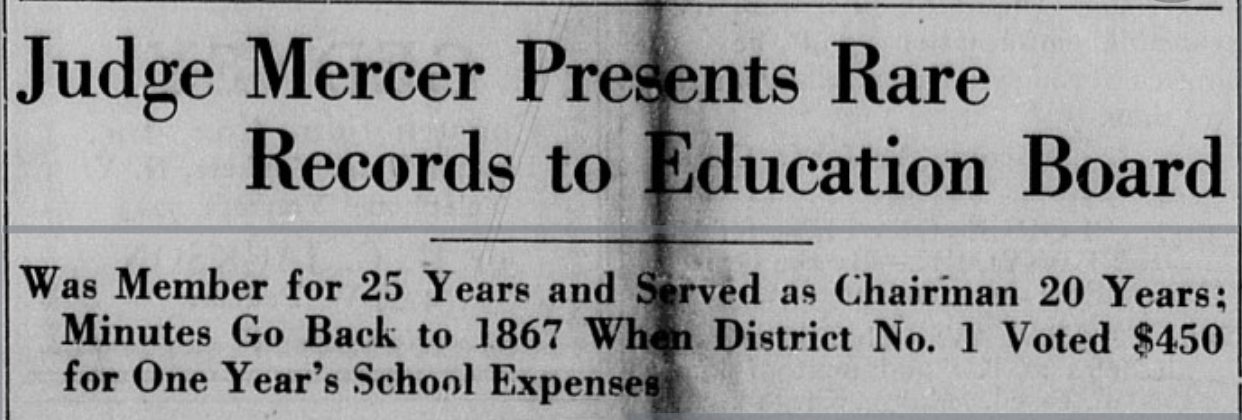
The existence of the notebooks was referenced in old articles and books from 50 years ago, but neither the Historical Society nor the Scarsdale Public Library knew of their current whereabouts. One of the earliest members of the school board, Judge William Mercer, originally donated them to the district in 1925. He was a member of the board for 25 years, and the chair for 20 of those years.

An article from 1925 referencing the long-unseen record books. Judge Mercer, one of the earliest school trustees, gifted them to the Board of Education 100 years ago.

On a hunt to find them, the Historical Society reached out to Honoré Adams, District Clerk and Executive Assistant to the Superintendent, who ultimately found them in district storage with the help of District’s Records Retention and Disposition Officer, Annabelle Allamby.

Honoré Adams, District Clerk, Executive Assistant to the Superintendent, and hero behind the rediscovery of the minute books.

There are 7 notebooks from the years 1868-1928, largely handwritten. They offer a rare glimpse into the district’s earliest days — a time of oil lamps, tight budgets, and even the occasional stray farm animal wandering onto the grounds. Together, the books trace the humble origins of a district that would grow into one of the nation’s most respected.

The earliest school board minute book, dating back to 1867.

Now fully digitized, transcribed, and searchable online, the minute books are accessible to the public through the library’s Digital Collection on the New York Heritage website. “We are privileged to host these historic files and make them accessible to the public,” stated Elizabeth Bermel, Director of Scarsdale Public Library. The digitization project was funded by a grant provided by the Historical Society, with all three organizations collaborating closely to preserve the fragile originals. 

"This project is exactly in keeping with our mission to preserve and share Scarsdale’s history," said Randy Guggenheimer, President of the Scarsdale Historical Society. "We are grateful to collaborate with the Scarsdale Public Schools and Scarsdale Library, continuing the village’s long tradition of community-minded spirit and collective effort."

“Our students can learn so much from this initiative,” said Drew Patrick, Superintendent of Scarsdale Public Schools. “It’s a real-life lesson on the power of primary sources, and how history is best understood through the records of those who lived it.”

To access to the digitized books, visit click here.

.

Uncovering the Identity of Bella Montgomery

BY LESLIE CHANG, TRUSTEE, SCARSDALE HISTORICAL SOCIETY

How much do you know about your great-grandmother? What if you found out she was a courageous suffragist, as evidenced by countless newspaper articles she left behind in Scarsdale, N.Y.? This is what happened to several families across the country when they heard from me during research for our documentary Women Rising: The Scarsdale Suffragists.

This is the third part of a blog series sharing the stories behind my investigations of the suffragists. 

Finding Bella Montgomery (1865 - 1939)

This 1904 photo is one of my favorite photos in the Village archives. It captures a casual domestic moment, and it’s also one of the only photos we have of these prominent Scarsdale women. They have names like Popham, Burgess, Montgomery, Obry, and Hyatt (you may recognize these names from streets and parks around town). The photo was heavily featured in our latest documentary, particularly because it includes one of our Village matriarchs, Bella Montgomery (in stripes). 

Verne Montgomery’s first birthday party, shown with his mother Bella wearing the striped dress. Taken June 11, 1904. Source: Scarsdale Public Library

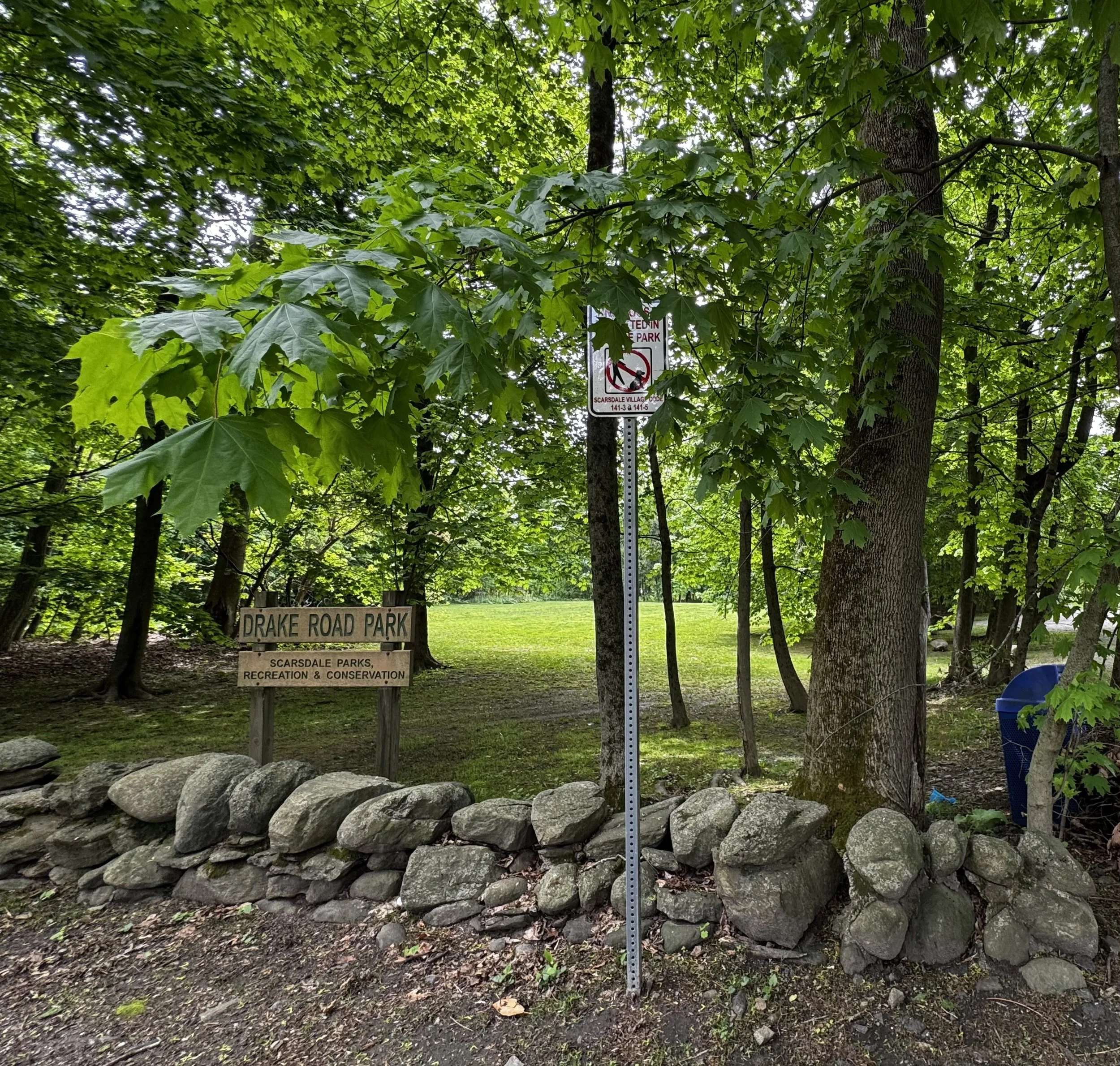
As for Bella, she was the daughter of a Civil War veteran, and married C. William Montgomery in 1897. During research for the documentary, I kept seeing “Mrs. C. W. Montgomery” come up in old suffrage articles - traveling through the state as a leader in the women’s rights movement. The Montgomerys lived at 34 Drake Road, but the only thing there now is the grassy field at Drake Road Park (below). I wondered: where did the house go? With only one photo of Bella and a lost house, she was a bit of a mystery - just the type of mystery that I love to solve!

All that remains on the former Montgomery land at 34 Drake Road is a grassy park.

The 1904 photo was taken at the first birthday party for Bella’s son, Verne (1903-1978). It’s amazing to think that a few years later, Verne would have walked down the hill from Drake Road to Schoolhouse No. 1 where Village Hall now stands. Verne was also one of the early graduates of Scarsdale High School in 1922. 

Sidenote: As an adult, Verne lived in Downers Grove, Illinois, which made me jump because that’s where my great-grandparents (the Worsleys) lived at that same time. Of all the towns in the United States, that was a funny coincidence. They may have known each other, and my great-grandfather could have been their family doctor. When I was looking up their home addresses, it was even spookier that my great-grandparents lived on a street named Montgomery. I took this as a sign that I should keep researching Bella Montgomery!

It was somewhat easy to find Verne’s grandson Pete in Illinois thanks to social media (via Verne’s obituary), since he still has the name Montgomery. It was thrilling, and I imagine he was quite surprised to hear from me! Verne passed away when Pete was young, so he didn’t know very much about the Scarsdale Montgomerys. In fact, he didn’t know Bella was a suffragist! He and his family were in for a treat. They graciously shared some photos over email, and it was gratifying to match up the photos with the information I knew about them. 

The Photo Collection

An undated portrait of Bella (Immen) Montgomery; but I’d guess it’s from the 1880s.

The only photo I’ve seen of Bella’s husband! He’s always referenced as “C. W. Montgomery,” and he was a real estate broker, a Scarsdale town assessor (before we were a “village”), and a charter member of Scarsdale Fire Company No. 1 when it was on Sprague Road.

Bella as a child, c. 1870.

A portrait of Bella Montgomery taken by “Harris Sisters - New Rochelle.” From an advertisement I found, they were a studio on Locust Avenue that provided “prosperity portraits” in the 1920s -1930s.

Bella, grandchildren, James and Patricia, with their dog.

The House Mystery: 34 Drake Road

The open acreage at Drake Road Park has always fascinated me, since two grand homes once stood on its sprawling land. At the turn of the century, the Montgomerys owned the whole area all the way to today’s Rodney Road.

The Montgomery estate located in 1901. The circular driveway across Drake Road is today’s Scarsdale Woman’s Club. Source: Bromley Map, Westchester County Archives

Nine years later in 1910, this map shows how a lot of suburban development had taken place! The Montgomery estate is smaller, and the Mercers owned about half of it (and the Hendricksons prior to them). The area near Drake Road shows the footprint of today’s Drake Road Park, where there’s still trees dividing the two former properties. Source: Bromley Map, Westchester County Archives

Today’s satellite view shows how the two properties have been subdivided into the park, Montgomery Road, and Mercer Court. T - the two small streets refer to the former estates.

Taken from Drake Road facing the park, you can see the field on the left and the parking lot on the right. Trees and stones still mark where the property line once stood.

The grassy side was once the Montgomery plot.   The other half (the parking lot side) used to belong to the Mercers, whose great-granddaughter Rachel contacted us years ago. She had sent a photo of the (also demolished) Mercer house, yet I still didn’t know what the Montgomery house looked like. 

The Montgomery’s next door neighbor, the Mercers, built this house on the foundation of the prior house that had burned down in 1902. Source: Mercer Family

As I had hoped, Pete sent me a photo of the lost Montgomery house at 34 Drake Road! It almost gives me chills to imagine it once stood where children now play soccer. 

The Montgomery home, 34 Drake Road, now demolished. Source: Montgomery Family


The house was built in 1902, and Pete knew that it held great value. “I remember my grandmother, Charlotte (wife of Verne) saying that that house is the reason she was able to live comfortably where she did late in her life.”  

A photo of today’s field where the Montgomery house once stood, alongside what it may have looked like when the house stood there.

I also realized something exciting. In the birthday party photo, the women are sitting on the steps of this same house. If it weren’t for this newly acquired photo of the house, we never would have known where they were sitting! In the photo below, you can see one of the porch columns.

This photo appeared in the Scarsdale Inquirer (July 15, 1971) with a very detailed caption. An excerpt: “The Scarsdale generation gap was bridged on June 11, 1904, at the first birthday party of Verne Immen Montgomery, who now lives in Downer’s Grove, Ill. 1st row l. to r.: Miss Yingling…; Mrs. C. William Montgomery, Verne’s mother; Mrs. George Just and Dorothy; Mrs. Reid and Mime, Madame Obry’s daughter and grandchild; Mrs. Bernard Davis, Verne’s godmother. Second row: Laura Vernon, a cousin of Mrs. Burgess, and Alexander Burgess; Mrs. Thomas Burgess; Mrs. Fred Gunning and Louise; Mrs. William Cravath White and William. Third row: Mrs. Charles D. Immen, Mrs. Montgomery’s mother; Mrs. Lewis Popham, mother of Mrs. Gunning; Mrs. White Sr., mother-in-law of Mrs. W. C. White. Fourth row: Miss Laura Vernon, aunt of Mrs. Burgess; Mrs. Oliver A. Hyatt; Miss Emma Fleming, Mrs. Popham’s sister; Madame Obry (standing); and Mrs. John Rooney, Madame Obry’s daughter.

The two grand homes at 34 and 28 Drake Road were in such a state of disrepair by the late 1960’s that the Village acquired the land for recreational purposes. At the time, the Drake-Edgewood neighborhood was in need of park land.

Scarsdale Inquirer, January 25, 1968.

Today, the street names of Montgomery Road and Mercer Court are the last vestige of those who once owned the land.

Bella Montgomery the Suffragist

Bella appears many times throughout the Scarsdale Suffrage Club meeting minutes, Based on her volunteer roles, she was clearly a finance-minded leader. This newspaper quote from a Suffrage Club thrift sale gives us a glimpse of her no-nonsense attitude: “If three of you want that $1.50 bargain, the price is $2.50." That amusing anecdote gives us a glimpse of her shrewd business mind.

One of Bella’s biggest roles was serving as the longtime treasurer of the League of Women Voters of Westchester. Pete sent us photos of a silver cup she had been awarded by the Westchester League. The inscription on the front of the cup reads "Joan of Arc Budget Cup" and on the back it reads: "Awarded to The Second Assembly District by the Westchester League of Women Voters and presented by the District to Mrs. C.W. Montgomery."

A photo of Bella’s silver award gifted in 1925 from the League of Women Voters of Westchester County, Source: Montgomery Family

I found mention of the award in a 1925 Scarsdale Inquirer article, when she was recognized for her success in fundraising. It must be nice for the Montgomerys to now know more of the story behind this cup that they’ve had for all of these years. They should feel such pride in their great-grandmother!

The silver cup was mentioned in this Scarsdale Inquirer article on May 9, 1925.

If this list of leadership roles is any indication, we can see why the Scarsdale Inquirer called her one of Scarsdale’s “most prominent women.”

I’m proud to shed light on her forgotten story, filling in some of the missing pieces so she can be rightfully remembered as one of New York State’s pioneers of the women’s rights movement. 

For more on Bella and the suffragist movement in Scarsdale, watch our documentary “Women Rising: The Scarsdale Suffragists” here. For other details and resources related to the Scarsdale’s suffrage leaders, click here.

Before the Billions: When Buffett Schooled Scarsdale 

BY LESLIE CHANG

We may be used to hearing about the moguls who have walked the streets of Scarsdale, but one name that feels unexpected is “Warren Buffett.” I heard his name come up in village lore about past teachers at the Scarsdale Adult School (SAS). Yes, he walked the halls of Scarsdale High School and stood at the chalkboards! But what brought him here, and what did he teach? I wanted to shed some light on this fun fact, and it’s perfect timing to coincide with the SAS being awarded the Spotlight Award at the upcoming Scarsdale Bowl Dinner on April 24, 2025.

Buffett teaching a course at Omaha University, just before he taught at the Scarsdale Adult School in the 1950s. Source: Susan Buffett for Forbes

Learning from the Best: Benjamin Graham

The story of Warren Buffett’s connection to Scarsdale begins with his mentor, Benjamin Graham, a Wall Street icon and “the father of value investing.” Graham may not be a household name, but he is like Wall Street’s Albert Einstein. He was born in 1894 and famously wrote the book “The Intelligent Investor” in 1949. Right around that time, Graham and his wife, Estelle, moved to 7 Harcourt Road. I found many details about his Scarsdale life in his biography: Benjamin Graham on Value Investing by Janet Lowe.

Photo of the Graham house at 7 Harcourt Road, Scarsdale, and photo of Graham from 1956. Source: Benjamin Graham on Value Investing

In the biography, Graham’s neighbor George H. Heyman Jr. (also a prominent financier) shared a funny anecdote about commuting with Graham to the City on the train. He described how Graham brought stacks of brokers’ reports on the train to read and tossed them on the floor one at a time. By the time they reached Scarsdale, Heyman said “it looked like it had snowed around our seats.” That’s a detail that today’s children of the digital age will never experience.

There was one other Scarsdale-related tidbit that I found very amusing. “In 1951, he built an addition on the house that jokingly was called Ben’s ‘$10,000 ‘Ping Pong room.’” I couldn’t help but stop by Village Hall to find evidence of this financier’s “playground.” Sure enough, I found his building department application for the addition. 

Benjamin Graham’s building permit application for creating a “ping pong room.” The note saying “Convert existing terrace to game room” is crossed out for some reason. Source: Village of Scarsdale

The same year he built his home addition, Graham was a lecturer at the Scarsdale Adult School. The classes are mentioned in his biography, stating: “as if he did not have enough to do, Ben taught an evening class at the Scarsdale Adult School.” He continued to teach other finance classes there through 1954. The Grahams were active in other community work, too. For example, Estelle was a second grade class parent at Fox Meadow School. Graham was also a guest lecturer for the League of Women Voters of Scarsdale and the Scarsdale Woman’s Club.

I tracked down his granddaughter, creator and writer of the blog beyondbengraham.com/blog. I was pleased to share some of my local findings (including his building permit application - very niche!), and she graciously helped me with some research and connections. The blog is rich with photos and stories behind her legendary grandfather, tracing his evolution as a person. She has a helpful overview of his life here.

A Young Warren Buffett

Graham’s acclaimed book had mesmerized the young Warren Buffett, and he applied to Columbia University’s Graduate School of Business largely because Graham was teaching a course there. As a student, Buffett established a close relationship with Graham and was hired to work at his prestigious firm, Graham-Newman, in 1954.

At 24, Buffett’s $12,000 annual salary allowed him to rent a garden apartment in White Plains. It’s very possible he was introduced to the area through Graham, who lived nearby. “I moved to White Plains, New York, with my wife, Susie, who was four months pregnant, and my daughter. Every morning, I got on a train to Grand Central and went to work,” Buffett stated in an article for Forbes. His stint living in White Plains was short-lived because Buffett missed Omaha, and planned to return upon Graham’s soon-anticipated retirement.

It’s so fortunate that during his brief 21-month stint in Westchester County, Buffett taught classes for SAS at Scarsdale High School. With only months of work experience, he may not have scored the position if it weren’t for the introduction by Graham. Lowe’s biography of Graham confirms the connection stating, he “helped Buffett land an evening job teaching investments at the Scarsdale Adult School.” Buffett had taken a Dale Carnegie class for self-confidence, and also wanted to keep his speaking skills sharp. 

After much digging, I found a voice recording on YouTube where Buffett mentions the classes in Scarsdale, stating, “I taught a course at the Scarsdale Adult School while I was back in New York right before I then returned to Omaha in 1956…I benefited enormously from a few teachers when I was both in undergraduate school and graduate school, so I think that part of life is passing along what you’ve learned to the next generation.”

He even elaborates on the content of his classes and mentions Graham as an inspiration, saying, “I didn’t really use notes very much, I would just sort of ‘wing it’ generally. I never did an elaborate presentation, but I tried to use real-life examples in class because the professor that I learned the most from, Ben Graham, always used current examples, and it made it very interesting.”

The funny thing is, even though SAS announced all of their classes in the Scarsdale Inquirer, I haven’t found Buffett’s name mentioned in our village newspaper. Unlike his mentor Graham, whose lectures were lauded in the local media, Buffett was still a no-name “kid” in the first year of his career. I wonder if any Scarsdalians took this course and later realized it was with THE Warren Buffett? 

I finally found one reference to Buffett’s teaching position in the White Plains newspaper, with his name misspelled. It confirmed he taught the investment “fundamentals” class, but “specialists in the field” taught the advanced course. Source: The Reporter Dispatch, September 9, 1955

Buffett once shared this piece of advice: “Investing in yourself is the best thing you can do. Anything that improves your own talents.” This is a great reminder to invest in ourselves and take a class at SAS - our teacher just may be the next Warren Buffett.

Listen for Warren Buffett’s mention of the Scarsdale Adult School at 4:27.


Congratulations to the Scarsdale Adult School on receiving the Spotlight Award at the Scarsdale Bowl Dinner on April 24, 2025!


New Historical Details Unearthed in Time for the Scarsdale Bowl Award Dinner 

The Scarsdale Historical Society, in partnership with the Scarsdale Foundation, today announced the discovery of long-forgotten facts in the 82-year history of the Scarsdale Bowl Dinner. The Village’s highest civic honor, the Scarsdale Bowl, will be awarded to Andrew Sereysky on Thursday, April 24, 2025 at the Mamaroneck Beach and Yacht Club. The Scarsdale Adult School will also be honored with a Spotlight Award. The Bowl’s history, with some newly unearthed details, highlights the importance of the Scarsdale Foundation’s annual event as a unifying force in the community. 

The original Scarsdale Bowl, purchased at Tiffany & Co. in 1944.

In 1943, a group of twelve Scarsdale civic leaders organized a dinner to honor George Clifton, a highly respected former Village Trustee and President of the Town Club, for his contributions to civic life. To mark the occasion, the Committee presented Clifton with a silver bowl. 

Spencer S. Scott, recipient of the 1953 Scarsdale Bowl, and other former winners, at the Scarsdale Bowl Award Dinner in Scarsdale, N. Y., 1953. From left to right: Malcolm Pirnie, J. Lester Van Name, George B. Clifton, S. Spencer Scott, George M. Waugh, George Hugh Smyth, Arthur F. Driscoll, Robert M. Irish, Lester W. Nelson, Cleveland A. Dunn. Credit: Scarsdale Public Library

The Scarsdale “Bowl” was almost going to be a Scarsdale “Bag.” In a Scarsdale Inquirer story from January 30, 1953, Committee member S. Spencer Scott recounted how the first award was going to be a “handsome traveling bag” until he suggested a silver bowl.  He thought it would be more of a keepsake, and would “always be treasured by its recipient.” His foresight was right, and this wasn’t his only strategic vision that improved Scarsdale. He spearheaded fundraising for building the Scarsdale Public Library (thus the Library’s “Scott Room”). It’s also notable that he had been President of Harcourt publishing (then known as Harcourt, Brace & Co.). Scott is just one example of the visionaries and passionate volunteers who have received the Bowl award.

S. Spencer Scott (left) receiving the 1953 Bowl Award. He was the originator of the idea to gift a silver bowl, and also the person for whom the Scarsdale Public Library’s Scott Room is named. Shown with 1956 winner, George M. Waugh, Jr. Credit: Scarsdale Public Library

The year after the first award dinner, twelve men made contributions to the Scarsdale Foundation for the purchase of a permanent “Scarsdale Bowl” from Tiffany & Co. 

The names of recipients are inscribed on the Bowl each year, and a smaller replica is given to each award recipient. The original Tiffany Bowl is a reproduction of a design from c. 1700 created by a Boston silversmith named Joseph Conyers. The colonial-era design is a fitting nod to Scarsdale’s colonial heritage.

By 1992, the Bowl ran out of space for new awardee names. A second Scarsdale Bowl was purchased from Tiffany’s, and the annual engraving tradition continues. Each year, the Foundation shuttles the Bowl to Wilson & Sons Jewelers for hand engraving. Wilson’s, a downtown Scarsdale fixture since 1932, has supplied the engraving and the awardee replica bowls for decades. Today, both Bowls have their own display cases at the Scarsdale Library in the Quiet Reading Room and Local History Center at Scarsdale Public Library.   

Bowl winners’ names were inscribed around the outside until 1984, when the Foundation fit a few more names along the inner edge. The 1991 winner Jeanne Richman was the last name listed before a new Bowl was purchased.

The Award Dinner has evolved from an invite-only “elder statesmen’s” black-tie dinner to an inclusive and festive affair open to all Scarsdale residents. Women first served on the Committee in 1973, but were not invited to attend the dinner until the following year. In 1975, Harriette Krantz was the first woman to receive the prestigious award. Today, the Chair and the Foundation President mindfully select Committee members that reflect the diversity of the Scarsdale community.

Harriet Krantz at the 1971 Bowl Dinner at the White Plains Hotel, the year she became the first woman to receive the honor. A few highlights of her distinguished civic work include being President of the Scarsdale and Westchester County League of Women Voters, a founder of the Scarsdale Adult School, Trustee of the Village of Scarsdale, President of the Scarsdale Library Board, and other leadership at the County and State levels. Shown with 1971 winner, Samuel Duboff. Credit: Scarsdale Public Library

The past award recipients include busy chief executives, industry leaders and parents, yet they have all prioritized their civic work to drive positive change in Scarsdale. “The collective contributions of the awardees in the last 82 years is immeasurable,” stated Randy Guggenheimer, past President of the Scarsdale Foundation and current President of the Scarsdale Historical Society. “Volunteerism built this Village; from our fire stations and library, to our award-winning schools and the Scarsdale Adult School. The Award Dinner celebrates volunteers like Andrew Sereysky who give their time and talent for the sake of the public good.” 

The two Scarsdale Bowls reside at Scarsdale Public Library - except when the newer bowl is at Wilson & Sons Jewelers for its annual engraving.

To purchase tickets to the Scarsdale Bowl Dinner, visit https://bit.ly/smbowl25. Funds raised support the Scarsdale Foundation’s mission of helping local individuals and community organizations through need-based student scholarships and project grants.