Honoring Lt. Reese Across Continents

By Lesley Topping

Lt. Robert Lawrence Reese (left) and Captain Gomer David Reese III (right)

Lt. Robert Lawrence Reese (left) and Captain Gomer David Reese III (right)

Lt. Robert Lawrence Reese
January 16, 1921 – July 5, 1944

Captain Gomer David Reese III
July 24, 1942- March 24, 1970

World War II memorial at Boniface Circle in Scarsdale Village. Photo by Lesley Topping.

World War II memorial at Boniface Circle in Scarsdale Village. Photo by Lesley Topping.

It is easy to miss the sunken war memorial in Scarsdale Village partially hidden from view in Boniface Circle. It is a quiet place to reflect on the long list of names of Scarsdale residents who served and died during World War II. As time goes on, it is harder to put faces to the names, but the Scarsdale Historical Society recently received an inquiry that shines a light on a young pilot, Lt. Robert Lawrence Reese, and his family. His name is engraved on the memorial along with his brothers, Arthur and Gomer Reese Jr. Another young family member and Scarsdale resident, Captain Gomer David Reese, III served and died in Vietnam.

Robert Reese, Joseph Ianotta, William Mizenberg, Marion Thornton, and Ralph Butzman were among the nine casualties in the crash. From b24.net, a website dedicated to the 392nd Bomb Group.

Robert Reese, Joseph Ianotta, William Mizenberg, Marion Thornton, and Ralph Butzman were among the nine casualties in the crash. From b24.net, a website dedicated to the 392nd Bomb Group.

From across continents, Andy Wells recently contacted the Society because he is gathering information to erect a monument and exhibition in his hometown in memory of Lt. Robert Reese and eight other American pilots who died when two of their planes crashed on his family’s farm in Foxley, England on July 5th, 1944.

Crash photo from the 392nd Bomb Group Air Force Report on b24.net.

Crash photo from the 392nd Bomb Group Air Force Report on b24.net.

The men were part of the 392nd Bomb Group, a B-24 Liberator group that operated out of Wendling, England flying strategic bombing campaigns against enemy targets in occupied Europe and Germany. Lt. Reese had flown combat missions in Europe, including the allied invasion on D-day. He was killed when his plane collided with another Air Force bomber during a practice session in formation flying.

Andy Wells’ mother, Margaret Wells, now in her nineties, was picking strawberries on a nearby farm when she witnessed the crash. “My mum told me it was a lovely sunny morning about 11 o’clock,” recalled Andy, “She said the sun actually shone on the planes because they were silver in color and they looked really pretty. That is why they were looking up in the sky, then suddenly the plane underneath just went upward into the belly of Robert’s plane and they both came down.”

Margaret Wells (left) and her son, Andy Wells (right).

Margaret Wells (left) and her son, Andy Wells (right).

Andy Wells was born after the war, but the events of the crash made a strong impression on him. For years afterwards family members found pieces of the wreckage as well as live machine gun bullets in the fields.“It was always folklore in the family,” said Wells “and interested me as a kid, and I started researching it more and more over the years.” Fascinated by local history and events, Wells has compiled extensive information about the 392nd Group and contacted family members of the men who lost their lives in the crash.

“Foxley is only a small village of less than 500 people, and probably only my mum knows anything about it now,” said Wells. “I think it has got to be remembered and that is why I am trying to do what I am trying to do.”

The 392nd Group had heavy casualties. 747 men from the 392nd Bomb Group lost their lives helping to liberate Europe from Nazi Germany. A memorial was erected in 1945 to honor those men at the Wendling Base. Lt. Robert Reese was only 24 years old when he died. He had attended Ohio University and worked for Liberty Mutual Insurance Company before he enrolled in the military. His mother, Mrs. Alfield Reese, and siblings lived on Nelson Road in Scarsdale. A few articles in the Scarsdale Inquirer reported that Robert and his brother Gomer enjoyed singing and performed in the choirs of local plays in Scarsdale and White Plains.

Lt. Reese was posthumously awarded the Air Medal for his distinguished air missions over Europe in October 1944. During the war he was interred at the Cambridge American Cemetery in England, and in 1948 he was buried with honors by the Scarsdale Post No. 52 American Legion at Mount Hope Cemetery in Hastings.

Robert’s surviving brothers, Arthur and Gomer Jr., both served in the army. Gomer Jr. was wounded when an artillery shell exploded near his back and legs while in combat against German troops in Elmdorf, Germany. He later became an executive with the Scarsdale Bank and president of the Rotary Club.

The World War II Memorial in Scarsdale Village lists the Scarsdale residents who served in the war. The starred names are those who died in the line of duty. Photo by Lesley Topping.

The World War II Memorial in Scarsdale Village lists the Scarsdale residents who served in the war. The starred names are those who died in the line of duty. Photo by Lesley Topping.

Gomer Jr.’s son, Captain Gomer David Reese III, like his Uncle Robert, became a pilot, joining the Air Force during the Vietnam War. He was a Scarsdale High School graduate who lived in Edgewood. Highly regarded for his flying skills, he was assigned to a classified secret bombing operation in Laos. On April 24, 1970, the plane he was co-piloting with Captain James E. Cross on an orientation tour was shot down by an anti-aircraft gun. His remains could not be returned to the United States and identified until 2009.

The daily war coverage of the Vietnam War was dramatically different than supportive news reporting during World War II. The death notice of Captain Reese shared the front page with an article reporting that Scarsdale High School Students were joining in the nationwide protest against the Vietnam War and a vigil for the students at Kent State University who were shot and killed by National Guards during a peaceful anti-war demonstration.

Captain Reese is buried at National Arlington Cemetery in Washington, DC and his name can be found on Panel 11W, Line 47 of the Vietnam War Memorial. He was awarded the Distinguished Flying Cross with an Oak Leaf Cluster for heroism and extraordinary achievement while engaged in aerial flight.

The Scarsdale American Legion Post 52 Memorial Garden on Mamaroneck Road next to the Scarsdale Pool will also be covered with flags and flowers on Memorial Day to honor the many residents of Scarsdale who served our country.

Below are the front pages of the issues of the Scarsdale Inquirer announcing the deaths of Lt. Robert Lawrence Reese and Captain Gomer David Reese III.

If any reader has additional information about Lt. Robert Reese that would be helpful for Andy Wells’ research, please contact us.

The article about the death of Lt. Robert Lawrence Reese is in the middle of column 6.

The article about the death of Lt. Robert Lawrence Reese is in the middle of column 6.

The article about the death of Captain Gomer David Reese III is at the bottom of columns 6 and 7.

The article about the death of Captain Gomer David Reese III is at the bottom of columns 6 and 7.

Scarsdale Historical Society Awards Grant to Friends of Odell House Rochambeau Headquarters

Photo-1-Odell-House-1905.jpg

Historic Site in Hartsdale, NY. Played A Key Role in Revolutionary War

The Scarsdale Historical Society (SHS) today announced the award of $7,500 granted to the Friends of the Odell House Rochambeau Headquarters (OHRH) in Hartsdale, N.Y. The grant is a part of SHS’s mission to discover, preserve and disseminate the rich history of Scarsdale and its neighboring communities in Central Westchester.

In 1781, OHRH served as the headquarters for the Comte de Rochambeau and his French Forces during the French American Encampment in Greenburgh, N.Y. It was here that Rochambeau and George Washington made the important decision to march their troops to Yorktown, Virginia, where they jointly defeated the British army and won America’s Independence. Not only is OHRH one of the most important sites of revolutionary history in Westchester County, but it is also a rare example of an 18th-century farmhouse, with its original details intact, that was occupied by one family from 1785 to 1990.

“Friends of OHRH are grateful for the continued support of the Scarsdale Historical Society,” stated Susan Seal, President of the Friends of Odell House Rochambeau Headquarters. This grant will help defray the cost of storing the vast contents of the house representing over 230 years of the life of the house. These antiques and artifacts have been safely removed from the house by the Friends to allow the restoration work to progress. The grant also continues to provide us with an expert to assist us in maintaining our website.”

“With this grant, we are pleased to play a role in making sure the history and legacy of OHRH lives on,” stated Randy Guggenheimer, President of the Scarsdale Historical Society. “OHRH is a community treasure that will educate and inspire the public for generations to come.”

Visit the OHRH website to learn more.

photo-2.jpg

Remembering Jack Davis

By Lesley Topping

Scarsdale Inquirer, 1976

Scarsdale Inquirer, 1976

Among the remarkable people who have lived in Scarsdale is the renowned cartoonist and illustrator, Jack Davis. His zany cartoons helped shape the satirical humor of Mad Magazine.  His illustrations for hundreds of news magazines, movie posters, books and comics have inspired illustrators for generations and are enjoyed by people around the world. Less known is that as a resident of Scarsdale for many years, he also generously donated his art and illustrations to the community.

SHSCartoon.jpg
IMG_2593.jpg

Jack and his wife, Dena raised their two children in Scarsdale and were always involved in neighborhood activities. Jack donated his sketches for fund raising auctions for the Scarsdale Historical Society’s Cudner-Hyatt House Museum and he illustrated several covers for the Society’s journal. He developed a cartoon series for the Scarsdale Inquirer about the adventures of a suburban family called the Villagers and he contributed sketches for many Inquirer articles. As an avid sports fan he designed posters and t-shirts for the Scarsdale High School’s football and basketball teams.

128349396_10157407656426857_4671669431448738174_n.jpg
Slammer.jpg
Fox Meadow Tennis Club displaying Davis’ tennis caricatures.

Fox Meadow Tennis Club displaying Davis’ tennis caricatures.

Drawing of Rick Reuter

Drawing of Rick Reuter

Today, The Fox Meadow Tennis Club on Wayside Lane proudly displays a series of sketches by Davis, which lovingly poke fun at Paddle Tennis players. Friends remember Davis as a gentleman with a rascal sense of humor. Rick Reuter, who lived next door to Davis, said that Jack often drew caricatures of his friends and members of the Scarsdale Golf Club.“ We played tennis on Saturday mornings,” said Reuter, “In the winter we would play platform tennis.” They also both volunteered as Scout Masters at St. James the Less Church. Reuter laughingly recalled that while he was renovating his own home, Jack came over and said, “Oh, you do all this stuff, can you help me?” Rick would often lend him a hand with fixing problems in his house. When Davis made a drawing of Rick he displayed him with all his tools and varied interests. Rick’s wife, Karen, was an artist, and she was the colorist for many of Jack Davis’ drawings.

The Davis Family moved back to Jack’s hometown state of Georgia, in the 1990s where he lived until he passed away in 2016 at the age of 91.

Scroll down to see more samples of Jack Davis’ work and visit these links:

A Jack Davis Sampling by Drew Friedman
Tributes to Jack Davis at The Comics Journal

IMG_2592.JPEG
The Villagers Comic Series, Scarsdale Inquirer, 1963

The Villagers Comic Series, Scarsdale Inquirer, 1963

Davis+Mad+Mad.jpg
TimeNixonDollar.png

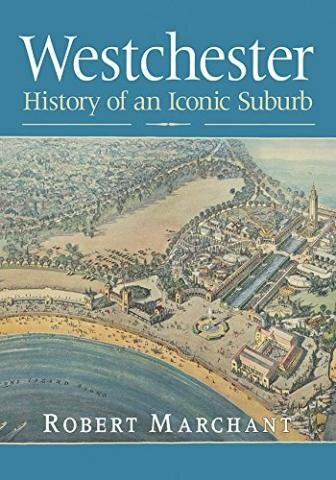
Westchester: History of an Iconic Suburb Event

Join us for a conversation with author Robert Marchant, to hear about his new book Westchester: History of an Iconic Suburb. This live virtual event will provide an informative and lively dialogue on Westchester’s fascinating and often surprising past, moderated by Jordan Copeland. The book examines four centuries of development in Westchester uncovering “a complex and often surprising narrative of slavery, anti-Semitism, immigration, Jim Crow, silent film stars, suffragettes, gangland violence, political riots, eccentric millionaires, industry and aviation, man-made disasters and assassinations.”

westchester history of an iconic suburb.jpg

Sunday, March 7 at 3 p.m. via Zoom
All members of the public are welcome. Admission is free.
Registration is required.
Click this link.

Robert Marchant is a staff reporter at Hearst Media in southern Connecticut and the Greenwich Time newspaper. He lives with his family in Croton-on-Hudson, NY. Jordan Copeland is a Scarsdale resident and Trustee of the Scarsdale Historical Society and Scarsdale Public Library  who has researched extensively and given many presentations about the history of Scarsdale.

The Scarsdale Historical Society is pleased to sponsor this event, along with The Scarsdale Forum, League of Women Voters Scarsdale and Scarsdale Public Library.

Annual Meeting via Zoom

Dear Scarsdale Historical Society Member,

Please join us for our Annual Meeting via Zoom on Tuesday, February 9th at 7:30 p.m. In addition to a brief update on the Historical Society and election of directors, Lesley Topping will discuss Dr. Martin Luther King Jr’s. visits to Scarsdale in the 1960s. She will also discuss Jack Davis, renowned cartoonist and illustrator and long-time Scarsdale resident.

The Zoom link is below:
https://us02web.zoom.us/j/87487448056?pwd=TGlEdFVlMHlHL2xsTmRJdjE4c0JsZz09
Meeting ID: 874 8744 8056
Passcode: 825514

Below are links to additional information about the Annual Meeting as well as information about renewing your membership for 2021. If you have already renewed, thank you and please disregard the Membership Card.

Best regards,

Randy Guggenheimer
President, Scarsdale Historical Society

Dr. Martin Luther King Jr. in Scarsdale, March 31, 1960 and October 29, 1965

By Lesley Topping

“Darkness cannot drive out darkness;
only light can do that. 
Hate cannot drive out hate;
only love can do that.”

—Martin Luther King, Love Your Enemies sermon, Scarsdale Baptist Community Church, 1960

Dr. Martin Luther King Jr. at the Abbott House benefit. From the left is Scarsdale resident John Marqusee, one of the event organizers, Arthur Litt, president of Abbott House Board of Directors and County Executive, Edwin Michealian. …

Dr. Martin Luther King Jr. at the Abbott House benefit. From the left is Scarsdale resident John Marqusee, one of the event organizers, Arthur Litt, president of Abbott House Board of Directors and County Executive, Edwin Michealian. Scarsdale Inquirer, November 4, 1965.

The Reverend Dr. Martin Luther King Jr. is praised around the world for his work fighting for interracial harmony, civil and voting rights, and an end to racial segregation.  As an advocate of non-violence, Dr. King was awarded a Nobel Peace Prize just four years before his life was cut short by an assassin's bullet on April 4, 1968.  

Dr. King spoke throughout the country, and many Scarsdale residents may be unaware that he visited Westchester County several times between 1956 and 1967. Although Dr. King is widely celebrated today, he was very unpopular in many regions of the country, including Westchester, during the heyday of The Civil Rights Movement. He was denounced as a socialist for his anti-poverty campaign and opposition to the Vietnam War. However, some forward thinking people from Scarsdale realized that the struggle for justice was not limited to the Southern United States and were eager to support and spread Dr. King’s message. Two of Dr. King’s visits were arranged by Scarsdale residents active in the fight for civil rights.

On March 31, 1960, Dr. Martin Luther King Jr. delivered a version of his famous and controversial sermon, Love Your Enemies, to an overflow crowd at the Scarsdale Community Baptist Church at 51 Popham Road in Scarsdale.  According to journalist Andy Bass, who wrote about Dr. King’s visits in The Westchester Historian (Spring 2018), the Reverend M. Forest Ashbrook was instrumental in bringing Dr. Martin Luther King Jr. to Scarsdale in 1960. Rev. Ashbrook was a resident of Edgemont and a member of the Fellowship of Reconciliation, a pacifist organization known for its civil rights work that challenged segregation laws in the South. Ashbrook initially wrote to civil rights leader Bayard Rustin, who was also a member of the Fellowship of Reconciliation. Rustin was an early advisor to King, and he organized the freedom rides beginning in World War II to integrate busing in segregated states. He was also the lead organizer of the March on Washington For Jobs and Freedom in 1963, where Dr. King delivered his powerful I have a Dream speech. Rustin was posthumously awarded the Presidential Medal of Freedom in 2013 by President Obama.

It would take fourteen months of letter-writing persistence by Rev. Ashbrook before Dr. King’s visit was confirmed. During his visit, Dr. King had dinner with one of his book editors, Eugene Exman, who lived on Old Army Road in Edgemont. Their collaboration led to the publication of King’s 1963 book, Strength to Love which includes his sermon, Love Your Enemies.

In 1965, as the civil rights movement was shaking the nation, two Scarsdale residents played a role in inviting Dr. King to speak at a fundraising dinner for Abbott House, an organization—still operating today—which provides social services to children and adults. The agency had acquired a new location in Irvington in 1963. The fund raising dinner was held at Schrafft’s Restaurant in Eastchester where Dr. King gave a speech titled the Dignity of Family Life —the Fountainhead of a Just Society to an audience of some 600 people.

Scarsdale Inquirer, September 23, 1965

Scarsdale Inquirer, September 23, 1965

However, Dr. King’s visit did not make the front page of the Scarsdale Inquirer.  The announcement of the dinner in his honor was reported on September 23, 1965 on page 18, and later only a paragraph and photograph was published after the event on November 4th on page 3.  As reported in the Inquirer, the dinner committee included Mrs. Ogden Reid and Mrs. Richard Ottinger (both of them congressmen’s spouses), Robert F. Kennedy, and Jacob Javits. Many Scarsdale residents and village officials attended the dinner. John Marqusee, a Fox Meadow resident who was a board member of Abbott house, and his friend Robert Ostrow, also from Scarsdale, helped initiate the invitation. They also hosted receptions for Dr. King, Bayard Rustin, Julian Bond and other leading activists before the dinner. 

Outraged by the violent reaction to the non-violent Civil Rights Movement, Robert Ostrow and John Marqusee decided to join the protest march from Selma to Montgomery led by Dr. King in March, 1965 to promote non-violence and Black voter registration in the South. During the march they were able to present Dr. King with a scroll from the Eastview Junior High School in White Plains. It read “To future voters of Alabama. We, the students of Eastview Junior High School, wish to express our deepest sympathy for your righteous and gallant efforts towards the equality and dignity of man.” It was signed by officers of the school's general organization as well as about 400 other students.

Many people throughout Westchester felt compelled to show their alliance with the ongoing protests. The Scarsdale Inquirer headlined that 500 people had walked for a mile in White Plains in sympathy with the protestors marching in Selma in 1965. They were led by Scarsdale students Hilary Ballon, age 9, her sister, Carla, age 8, and their father Charles Ballon. A Scarsdale resident at the walk was quoted as saying “This march was planned to show our sympathies with those who have worked and died for constitutional rights in the South.”

An article about Robert Ostrow’s participation in the civil rights movement. White Plains Reporter Dispatch, August 1965

An article about Robert Ostrow’s participation in the civil rights movement. White Plains Reporter Dispatch, August 1965

Robert Ostrow, who lived with his family on Montrose Road in Greenacres, volunteered in 1964 as an attorney for representatives of the Student Nonviolent Coordinating Committee (SNCC) during the Freedom Summer voter registration drive. He traveled the perilous back roads of rural Mississippi with activist Kwame Ture, (formerly known as Stokely Carmichael), to help bail SNCC-trained Civil Rights Workers out of jail. Some of his harrowing experiences were reported in the New York Times, Reporter Dispatch and Scarsdale Inquirer.

Martin Luther King Jr.’s courage, work and words still resonate strongly in the continued struggle for racial equality, civil rights, economic justice, and world peace.

The 30-foot metal sculpture with words of Dr. King that stands near Lincoln Center in Manhattan was created by William Tarr while he was living in Scarsdale in 1973.

The 30-foot metal sculpture with words of Dr. King that stands near Lincoln Center in Manhattan was created by William Tarr while he was living in Scarsdale in 1973.

 NOTES

  • For a recording and text of Dr. King’s sermon Love Your Enemies click here.

  • For a recording of Dr. King’s invocation at the Abbott House Dinner in 1965 click here.

  • Archives of the Scarsdale Inquirer can be searched here.

SOURCES

  • Andy Bass, MLK Visits to Westchester, 1956-1967, The Westchester Historian, Spring 2018.

  • For information on King’s visit to the Scarsdale Baptist Church in 1960 see Andy Bass’ blog here.

  • 500 March to Demonstrate Sympathy with Selma Walk. Scarsdale Inquirer, March 25, 1965.

  • Selma Scarsdale Marchers Greeted by Defiant Confederate Flag. Scarsdale Inquirer, April 1, 1965.

  • Selma, Alabama… More Than Headline To a Volunteer Lawyer from Scarsdale Lawyer. White Plains Reporter Dispatch, August, 1965.

  • Dr. King to Speak Here at Dinner in His Honor. Scarsdale Inquirer, September 23, 1965.

  • Civil Rights Leaders Speaks. Scarsdale Inquirer, November 4, 1965.

  • Negro-Jewish Relations. (Rustin Speaks at Westchester Reform Temple). Scarsdale Inquirer, November 16, 1967.

  • Reliving Volunteer Work in the South. New York Times, June 16, 1995.